The Damage You Don't See Coming
When people picture fire damage, they picture char, soot, and smoke odor. What they often don't picture is water — sometimes thousands of gallons of it, used to put the fire out. That water goes somewhere, and it doesn't evaporate on its own before it causes a second wave of damage.
Addressing fire damage without also addressing the water left behind is one of the more common ways a fire-damaged property develops additional problems weeks after the fire itself is out.
Where the Water Comes From
Firefighting Operations
Suppressing a structure fire typically requires large volumes of water applied under pressure, which soaks into flooring, walls, ceilings, and furnishings well beyond the immediate burn area. Even rooms that never caught fire can end up significantly wet from runoff and overspray.
Sprinkler Systems
In homes or units with fire sprinkler systems, activation can release substantial water even for a small, contained fire, sometimes causing more immediate water damage than the fire itself did before it was extinguished.
Why This Water Is Treated Differently
It's Rarely Clean Water
Water used to fight a fire picks up soot, ash, charred debris, and often chemical residue from burned synthetic materials as it moves through a structure. This generally puts it in a more contaminated category than a typical plumbing leak, as covered in our guide to water damage categories, which affects how it's cleaned up and what materials can be salvaged.
It Often Goes Unnoticed at First
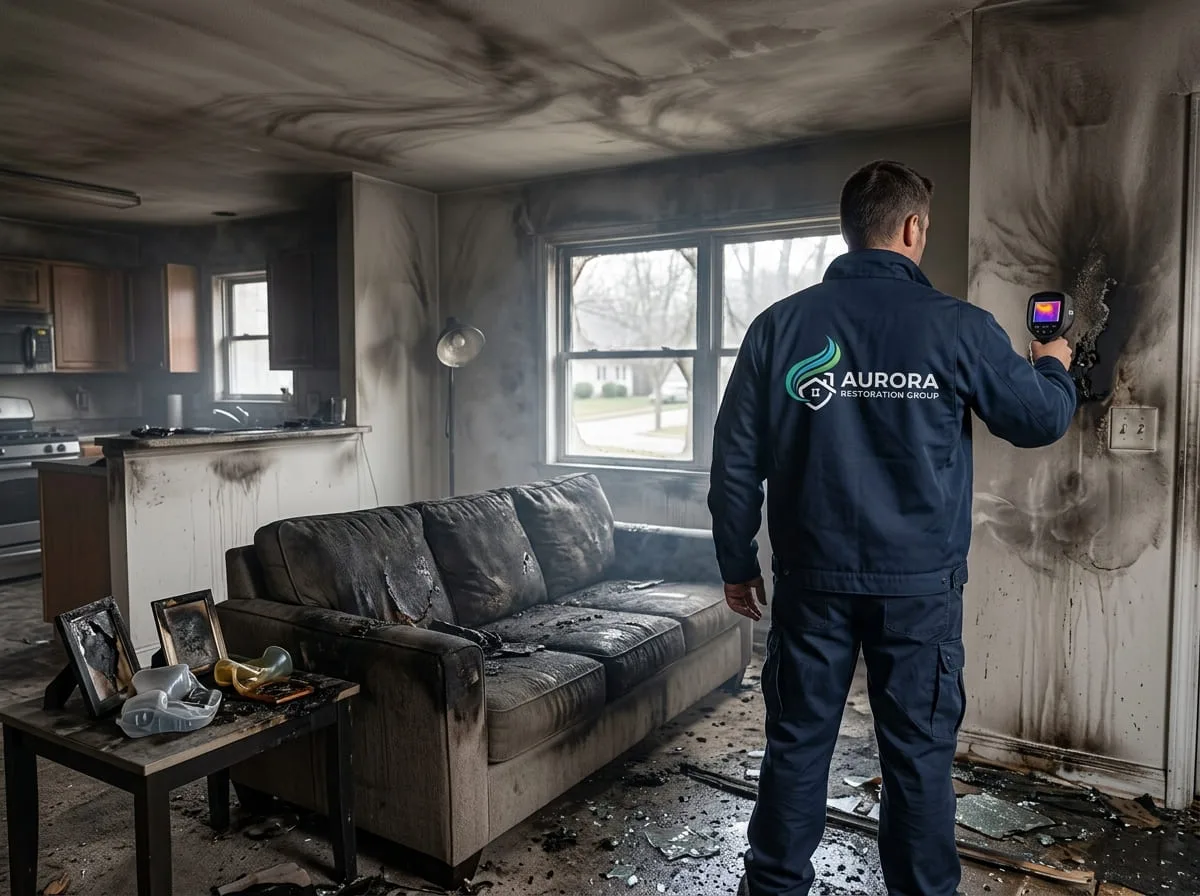
In the aftermath of a fire, attention naturally focuses on visible fire and smoke damage. Water that's soaked into subfloor, wall cavities, or a level below the fire itself can be easy to overlook during initial cleanup, especially if the surface appears to dry on its own within a day or two.
Where Hidden Moisture Tends to Hide
Floors Below the Fire
Water travels downward with gravity, so a fire on an upper floor or in an attic frequently causes water damage on the floor below, sometimes more extensive than the fire damage itself.
Wall and Ceiling Cavities
Water that soaked into ceilings and walls during suppression can remain trapped inside cavities long after the visible surface looks dry, following the same behavior as any other structural water intrusion.
Beneath Flooring and Padding
Carpet, padding, and subfloor absorb water readily and hold it far longer than a hard-surface floor, particularly in rooms that received heavy runoff during firefighting.
How This Gets Assessed
The same tools used for standard water damage assessment apply here: moisture meters and thermal imaging to map where water traveled, described in more detail in our article on how professionals find hidden moisture behind walls. The difference after a fire is that this assessment happens alongside soot, char, and structural fire damage evaluation, rather than as a standalone step.
Why Drying Timing Still Matters After a Fire
The same urgency that applies to any water event applies here too. Materials that stay wet longer are more likely to need removal rather than drying, and trapped moisture behind fire-damaged walls creates the same conditions for microbial growth discussed in our article on how quickly mold can become a concern after water damage. A property that's been through both fire and water intrusion needs both addressed on a similarly fast timeline, not water damage treated as an afterthought.
Structural Safety Considerations
Weakened Framing Under Added Weight
Fire can weaken structural framing, and saturated materials add significant weight on top of that weakened structure. A ceiling or floor section that survived the fire itself can be at greater risk of collapse once it's also carrying the weight of trapped water, which is one reason professional assessment of structural safety happens before extensive interior work begins.
Why This Isn't a DIY Assessment
Judging whether a fire- and water-affected structure is safe to move through requires experience most homeowners don't have. This is one of the clearer cases where waiting for a professional evaluation, rather than re-entering to assess damage independently, is the safer choice.
A Realistic First 24 to 48 Hours
Immediately After the Fire Is Out
Once the fire department has cleared the property as safe to approach, priorities include securing the structure (boarding up windows or doors, tarping a damaged roof) and beginning water extraction in areas where it's safe to work.
The Following Day
Moisture mapping typically continues, drying equipment gets positioned, and an assessment of both structural fire damage and water-affected materials starts to take shape, feeding into a combined restoration plan rather than two separate ones.
What Full Recovery Involves
Addressing a fire-damaged property properly usually means water extraction and structural drying running alongside soot and smoke cleanup, contents cleaning, and — where the fire caused structural loss — full reconstruction. The dedicated firefighting water damage cleanup page covers this combined process in more depth, including how contents pack-out and cleaning fit alongside structural drying.
Smoke and Water Combined: A Unique Cleaning Challenge
Soot Interacts With Moisture
Soot residue can react with water and humidity in ways that make cleanup more complex than either fire or water damage alone. Damp soot can smear and set into surfaces more stubbornly than dry soot, which is one reason timing and sequencing of cleanup steps matters after a fire.
Odor Considerations
Trapped moisture in a fire-damaged structure can also affect how smoke odor is addressed, since damp materials tend to hold odor longer than dry ones. Effective odor treatment generally depends on the space being properly dried first, not just cleaned or deodorized on the surface.
Contents and Belongings Caught in Both Fire and Water
Items That Survived the Fire but Got Wet
Furniture, documents, electronics, and personal items that escaped direct fire damage can still be affected by the water used to fight it. These items generally need their own drying and cleaning assessment, separate from the structural drying happening in the building itself.
Why Contents Cleaning Runs on a Parallel Track
Contents cleaning and pack-out services typically operate alongside structural work rather than waiting for it to finish, since some items are more time-sensitive for water exposure than the structure itself. Removing salvageable contents to a controlled cleaning environment as early as reasonably possible improves the odds of saving items that would otherwise continue absorbing ambient moisture inside the affected structure.
A Note on Insurance
Because fire and water damage often need to be documented and scoped together, insurance claims following a house fire typically account for both categories of loss in the same claim rather than treating them separately. Insurance claim assistance is available through the licensed contractor handling reconstruction, which helps keep fire and water damage documentation aligned from the start.
Why This Combination Calls for a Single Coordinated Response
Fire damage and the water damage that follows it are not really two separate problems handled one after the other. They interact: soot settling into wet materials, structural weakness compounding under saturated weight, and odor treatment depending on drying being complete. That's why a coordinated response covering both from the start generally produces a better outcome than treating the fire as the emergency and the water as an afterthought.
Anyone assessing a fire-damaged property should expect water damage evaluation to happen at the same time as the fire and smoke assessment, not as a separate visit scheduled later.
Residential vs. Commercial Fire and Water Combinations
A residential fire, even a contained one, often involves enough water from either firefighting or sprinkler activation to affect an entire floor. Commercial properties add complexity through larger sprinkler systems, more extensive ductwork that can carry moisture between spaces, and often a wider variety of materials and equipment that each respond differently to combined fire and water exposure. In both cases, the same underlying principle applies: the water side of the loss needs its own dedicated assessment rather than being treated as incidental to the fire damage.
Frequently Asked Questions
Does every house fire cause water damage too?+
Not every fire requires the volume of water that leads to significant secondary water damage, but most structure fires that require active firefighting do involve substantial water application, which frequently causes damage beyond the burned area itself.
Is water damage from firefighting treated the same as a normal leak?+
Not exactly. Water used to fight a fire typically picks up soot, ash, and debris as it moves through the structure, generally putting it in a more contaminated category than a clean plumbing leak, which affects cleanup and material salvage decisions.
Can water damage from a fire affect rooms that didn't burn?+
Yes. Water travels with gravity and through building materials, so rooms and floors below or adjacent to the fire can experience significant water damage even if they had no direct fire or smoke exposure.
How soon should water damage from firefighting be addressed?+
As soon as it's safe to access the property. The same urgency that applies to any water intrusion applies here, since trapped moisture behind fire-damaged walls or under flooring can lead to additional problems if drying is delayed.
Will my fire insurance claim also cover the water damage?+
Fire and water damage from firefighting efforts are typically documented and scoped together as part of the same loss, though specific coverage depends on your policy. Insurance claim assistance through the contractor handling the work can help make sure both are accounted for.
Can smoke odor return if water damage isn't fully addressed?+
Yes. Damp materials tend to hold odor longer than dry ones, and smoke odor treatment is generally more effective and longer-lasting once the affected space has been properly dried rather than treated while still damp.