
Why Burst Pipes Are Different From Slow Leaks
A slow, dripping leak gives you time. A burst pipe does not. Depending on water pressure and pipe size, a full break can release many gallons of water per minute, which means the difference between calling immediately and waiting even twenty minutes can be the difference between a contained mess and standing water across multiple rooms.
Colorado's Front Range is particularly prone to this kind of failure. A chinook-driven mild spell followed by a fast-moving arctic cold front puts pipes through a freeze-thaw-freeze cycle that stresses them more than steady, predictable cold does, and it's a pattern regional plumbers and restoration companies specifically flag as a leading cause of pipe failures here.
Step One: Shut Off the Water
Find the Main Shutoff Valve
Every household member should know the location of the main water shutoff before an emergency, since a burst pipe is not the time to be searching for it. In most homes it's near where the water line enters the house, often in a basement, utility closet, or crawlspace access area.
Shut Off Power If Water Reached Electrical Areas
If water is pooling near outlets, a water heater, or an electrical panel, and you can reach the breaker panel without walking through standing water, shut off power to that area. If reaching it means stepping through water, don't risk it — wait for someone who can do it safely.
Step Two: Contain What You Can
Move Belongings Out of the Water's Path
Move furniture, boxes, and electronics away from the flow of water and off the floor where possible. In a basement, this often means moving stored items off the floor entirely, since unfinished basements are common throughout Aurora and frequently double as storage space.
Use Towels and Buckets Strategically
Towels can slow water from spreading into adjacent rooms, and a bucket under a dripping ceiling or cabinet buys time. These are stopgaps, not solutions — the goal is limiting spread until extraction equipment arrives, not drying the space yourself.
Step Three: Document Before You Clean
Photograph the Source and the Spread
Take photos of the pipe itself if it's visible, along with wide shots of every affected room. This documentation matters for insurance and also helps the arriving crew understand how the water traveled before they start moving anything.
Note the Timeline
Write down roughly when you noticed the leak, when you shut off the water, and any steps you took in between. This is easy to forget once cleanup is underway, but useful to have written down early.
What Not to Do While You Wait
- Don't try to repair or cut into the pipe yourself unless you have plumbing experience — a temporary fix done wrong can make the break worse.
- Don't run a household vacuum over standing water; it's not built for it and creates a shock risk.
- Don't ignore water that's reached a ceiling below the leak — a sagging, saturated ceiling can collapse, and relieving pressure with a small controlled puncture is often safer than waiting.
- Don't assume the water has stopped just because the visible flow has slowed — a partially closed valve or a slow drip from the same break can continue for hours.
If the Pipe Bursts While You're Away
Coming Home to Standing Water
Arriving home to find a burst pipe that's been running for hours, or longer, is a more serious version of the same emergency. The steps are the same — shut off the main water supply first — but the volume of water and time it's had to spread mean a professional assessment of moisture behind walls and under flooring is even more important.
Consider a Water Leak Detection Device
For homes that are frequently empty during the day or during travel, a water leak detection device that shuts off the main supply automatically or sends an alert can significantly reduce how much water is released before anyone notices. This is a preventive measure worth considering after a first incident, not something to install only after a second one.
Renters and Multi-Unit Considerations
If you rent, or live in a multi-unit building, a burst pipe can affect neighboring units as water travels through shared walls, ceilings, or floors. Notify your property manager immediately in addition to taking the shutoff and containment steps above, since water in a shared building often needs to be addressed at the building level, not just within your own unit.
What Happens When Restoration Crews Arrive
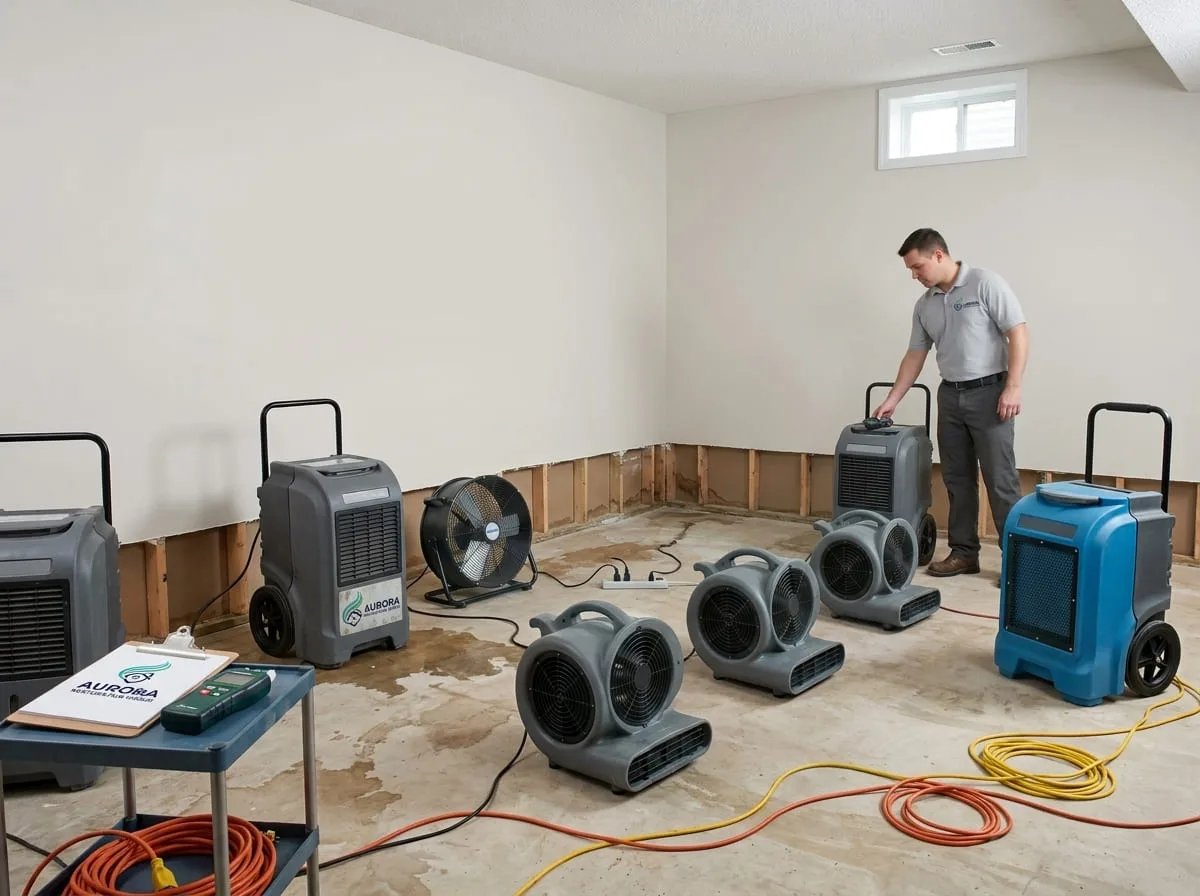
Emergency-dispatched crews start with water extraction, removing standing water before assessing how far it traveled using moisture meters and, where needed, thermal imaging. Burst pipes often push water into wall cavities and under flooring well beyond the visibly wet area, which is why that mapping step matters as much as the extraction itself — see our guide on how extraction and full restoration differ.
From there, structural drying and dehumidification begins, following the general timeline and factors covered in our article on how long water damage takes to dry. Because burst pipes frequently affect basements and lower floors in Aurora homes, drying may take longer than a comparable leak on an upper floor, given basements' typically limited natural airflow. The dedicated burst pipe water damage page covers the restoration process for this specific cause in more depth, and our guide to a flooded basement is worth reading if that's where the pipe failed.
Common Locations Where Pipes Burst
Exterior Walls
Pipes routed through exterior walls have less insulation buffering them from outdoor temperature swings, making them more vulnerable during a hard freeze than interior plumbing.
Unheated Basements and Crawlspaces
Given how common basements are throughout Aurora, exposed supply and drain lines in an unheated or under-insulated basement or crawlspace are a frequent freeze point, especially in older homes built before current insulation standards.
Garage-Adjacent Plumbing
Pipes running along or near an uninsulated garage wall face a similar risk, particularly if the garage itself gets little residual heat from the rest of the house.
What Insurance Typically Expects to See
Insurers generally want documentation of when the pipe failed, what immediate steps were taken to limit damage, and photos or video from before cleanup began. Keeping the burst section of pipe (or photos of it before repair) can also be useful, since it shows the adjuster the nature of the failure rather than just its aftermath.
Reducing Freeze Risk Going Forward
Once the immediate cleanup is handled, it's worth having exposed plumbing in unheated crawlspaces, basements, or exterior walls evaluated, particularly in older Aurora housing stock built before current insulation standards. Pipe insulation and maintaining consistent indoor heat during cold snaps are simple steps that reduce the odds of a repeat failure during the next freeze-thaw cycle.
Simple Habits That Help During a Cold Snap
Keep a Consistent Indoor Temperature
Lowering the thermostat significantly to save energy during a hard freeze can leave interior wall cavities colder than expected, particularly in rooms that are rarely used. Maintaining a more consistent indoor temperature during a multi-day cold snap is a simple way to reduce stress on plumbing.
Let Faucets Drip on the Coldest Nights
Allowing a faucet connected to a vulnerable pipe to drip slightly during an extreme cold snap keeps water moving, which makes freezing less likely. This is a small, low-cost habit worth adopting specifically during the sharpest cold fronts that follow a mild chinook spell.
Open Cabinet Doors Under Sinks
Cabinets under sinks on exterior walls can trap cold air around plumbing. Opening the doors during a hard freeze lets warmer room air reach the pipes, which is a small step that costs nothing and takes only a moment.
Frequently Asked Questions
How much water can a burst pipe release?+
It depends on pipe size and water pressure, but a full pipe break can release several gallons per minute, which is why shutting off the main water supply immediately is the single most important first step.
Why are burst pipes common in Aurora and the Denver metro area?+
Colorado's Front Range experiences large, rapid temperature swings driven partly by chinook winds, which can push winter temperatures well above freezing before a fast-moving cold front drops them sharply again. That freeze-thaw-freeze pattern stresses pipes more than steady cold does.
Should I try to patch a burst pipe myself before crews arrive?+
Shutting off the water supply is the priority. Attempting a repair without plumbing experience can worsen the break or create a new failure point, so it's better to focus on containment and documentation until qualified help arrives.
Is a burst pipe covered by homeowners insurance?+
Coverage details vary by policy, but sudden and accidental pipe bursts are commonly covered perils under standard homeowners policies. Insurance claim assistance is available through the restoration contractor handling the repair, and your policy documents will have the specifics for your situation.
Can a burst pipe in the basement affect upper floors?+
Generally water from a basement burst stays at the lowest level and spreads laterally rather than traveling upward, but a burst pipe in an upper-floor wall or ceiling can absolutely affect the floors below it as water travels downward with gravity.