There's No Single Answer
Drywall reacts to water differently depending on how much got wet, how long it stayed wet, and what kind of water it was. Some wet drywall dries out completely and performs fine afterward. Some has to come out. Anyone who tells you drywall is always salvageable, or always ruined, isn't giving you the full picture.
How Drywall Behaves When It Gets Wet
The Paper Face Is the Weak Point
Drywall is a gypsum core sandwiched between paper facings. The paper wicks water quickly and is also the material most likely to support microbial growth if it stays damp. The gypsum core itself can often survive brief wetting, but the paper is what usually determines whether a section is worth trying to dry.
Height of the Water Line Matters
Water wicks upward through drywall along a visible or measurable line. A few inches of wicking from a small spill is a very different situation than drywall soaked a foot or more up the wall from standing floodwater, which is one reason technicians use moisture meters to map the exact extent rather than guessing from what's visible on the surface.
When Wet Drywall Can Usually Be Dried in Place
Clean Water, Caught Early
Drywall exposed to clean water (from a supply line leak, for example) and dried within roughly 24 to 48 hours, using proper air movement and dehumidification, often dries successfully without structural issues. The key variables are how clean the water was and how quickly drying started.
Minimal Wicking Height
If moisture only reached the bottom few inches of a wall, drying in place with monitored equipment is frequently a reasonable approach, especially if the wall cavity itself (insulation, framing) wasn't heavily saturated.
When Drywall Usually Needs to Be Removed
Contaminated Water
Drywall exposed to gray or black water — sewage backups, floodwater, or water that has been standing long enough to become contaminated — is typically removed rather than dried, regardless of how it looks. Our guide to water damage categories explains how that classification is determined and why it changes the approach.
Extended Saturation
Drywall that stayed wet for several days, especially in an enclosed space with little airflow such as a closet or a basement wall, often develops swelling, sagging, or a soft, crumbling texture that means it's no longer structurally sound, even if it eventually dries out.
Visible Deterioration
Bulging, warping, a change in texture, or visible microbial growth on the surface are all signs that removal, rather than drying, is the appropriate next step. These signs mean the material has already broken down, not just gotten wet.
How Professionals Make the Call
Moisture Meters, Not Guesswork
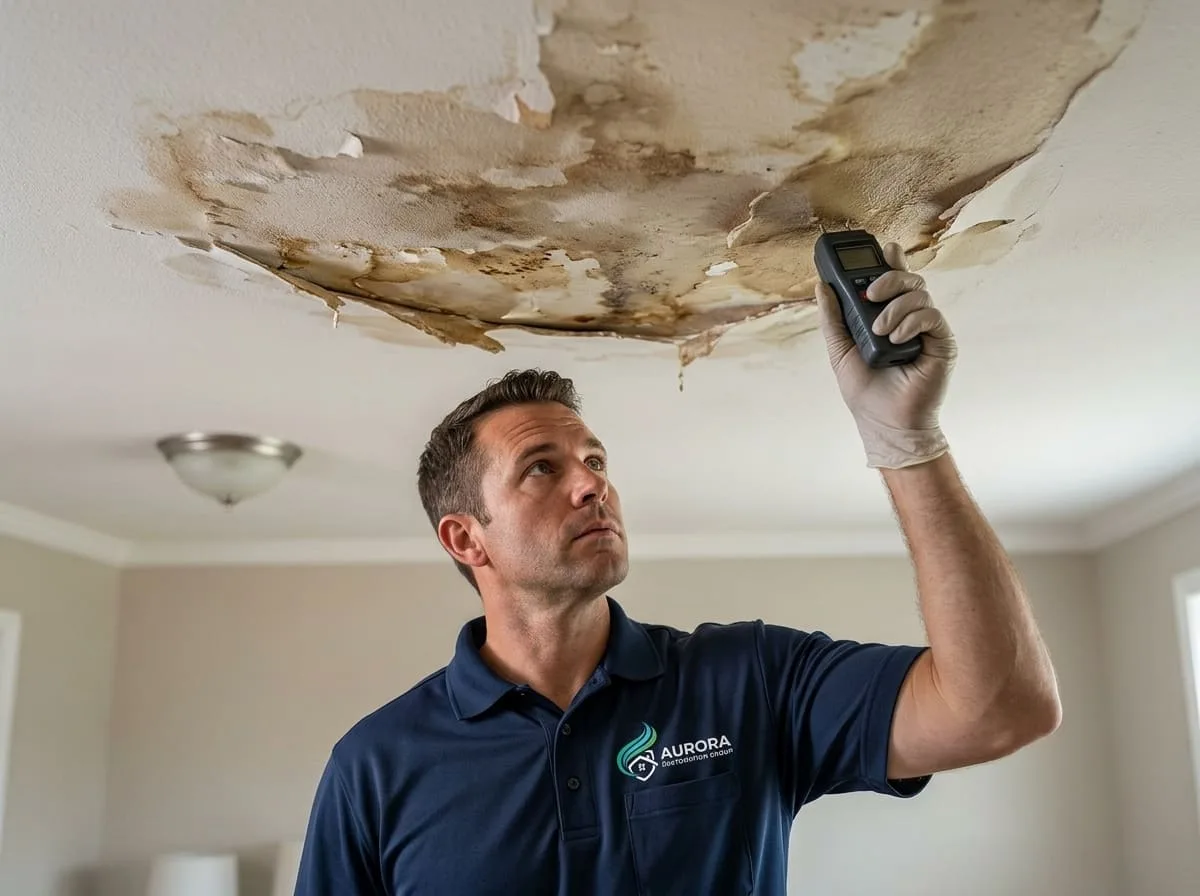
Technicians use penetrating and non-penetrating moisture meters to measure how saturated drywall actually is, comparing readings against a dry baseline from an unaffected wall. This tells them whether a section is drying appropriately over the following days or whether it's staying wet despite equipment running, which is often the clearest sign that removal is the better option.
Checking Behind the Surface
Because insulation and framing sit directly behind drywall, professionals often check whether the wall cavity itself is saturated, not just the visible drywall surface. Our related guide on how professionals find hidden moisture behind walls covers the tools used for this, including thermal imaging and small inspection holes.
What Drying Drywall in Place Actually Involves
Air Movers Positioned Along the Wall
When drywall is being dried rather than removed, air movers are typically angled to run air along the wall surface, which speeds evaporation from the paper facing without blasting air directly at a single spot.
Dehumidification to Prevent Reabsorption
Running air movers without dehumidification just moves moisture into the room air, where it can resettle on the same or nearby surfaces. Both pieces of equipment typically run together for drywall drying to actually make progress.
Daily Moisture Checks
Drywall being dried in place is checked at intervals with a moisture meter to confirm it's actually trending toward a dry baseline. If readings plateau rather than continuing to drop after a couple of days, that's usually the signal to reconsider drying in place versus removing that section.
Painted, Textured, and Finished Drywall Considerations
Textured Ceilings and Walls
Textured finishes can trap moisture slightly differently than a smooth painted surface, and some texture types are more prone to visible damage (bubbling, flaking) even when the drywall underneath is drying successfully.
Wallpaper Complicates Drying
Wallpaper acts as a vapor barrier in many cases, which can trap moisture behind it and slow drying significantly. Wallpapered walls that got wet often need the wallpaper removed to dry the drywall properly, even if the wall would otherwise have been salvageable.
Why Removal Isn't a Failure
It's tempting to see drywall removal as an unnecessary expense, but leaving saturated or contaminated drywall in place to "see if it dries" often costs more in the end. Trapped moisture behind intact drywall is a common path to the kind of hidden microbial growth covered in our article on mold after water damage. Removing compromised sections early, and drying what can genuinely be saved, is usually the more cost-effective long-term choice.
Ceiling Drywall vs. Wall Drywall
Ceilings Carry More Risk
Wet ceiling drywall is generally treated more cautiously than wall drywall, since gravity works against it. A saturated ceiling can sag and eventually collapse under its own weight, especially if the wetting came from an upstairs leak or roof intrusion. A sagging or bulging ceiling is a safety hazard that usually calls for removal rather than an attempt to dry it in place.
Walls Have More Drying Options
A wet wall doesn't carry the same structural collapse risk, which generally gives it more of a fighting chance to be dried in place if the water was clean and the wetting was limited to a smaller area near the floor.
Moisture-Resistant Drywall Types
Green Board and Paperless Drywall
Some bathrooms, basements, and other moisture-prone areas use moisture-resistant drywall (often called green board) or paperless drywall with a fiberglass facing instead of paper. These products resist moisture better than standard drywall, but moisture-resistant doesn't mean waterproof, and extended saturation can still compromise them.
Why This Matters in Basements
Given how common basements are throughout Aurora's housing stock, it's worth knowing whether finished basement walls use standard or moisture-resistant drywall, since that can factor into how confidently a section can be dried versus removed after a basement water event.
What This Looks Like in Practice
On a typical water damage call, technicians will assess drywall room by room rather than applying a blanket decision to the whole house. It's common for one wall to be fully salvageable while an adjacent wall, closer to the source or lower in the room, needs partial removal. This selective approach, guided by moisture readings rather than assumptions, is generally the more accurate and less wasteful way to handle it.
Questions Worth Asking Before Drywall Comes Out
If a technician recommends removing a section of drywall, it's reasonable to ask what the moisture readings showed, whether the water category played a role in the decision, and whether the wall cavity behind it was also affected. A straightforward answer to these questions is a good sign that the removal decision is based on measured conditions rather than a default assumption to replace anything that got wet.
It's also worth asking what happens to the areas that are being dried in place: how often they'll be checked, and what readings will be used to confirm they're actually back to normal before the drying equipment comes out and the wall is considered done.
A Practical Summary
Wet drywall is not automatically a total loss, and it is not automatically salvageable either. Clean water, caught early, with limited wicking height, gives drywall a genuine chance of drying successfully. Contaminated water, extended saturation, or visible deterioration point toward removal. The honest answer, in nearly every case, comes down to what the moisture readings and water source actually show, not a blanket rule applied to the whole house.
Frequently Asked Questions
Can drywall dry out on its own without professional equipment?+
A very minor, small-area wetting from clean water might dry adequately with good natural airflow, but most real leaks wick further into the material than is visible, so professional drying equipment and moisture verification give a much more reliable outcome.
How can I tell if my drywall needs to be replaced?+
Bulging, sagging, a soft or crumbling texture, visible staining, or a musty smell are all signs that drywall has deteriorated beyond simple drying and should be evaluated for removal.
Does all wet drywall grow mold?+
Not necessarily. Drywall that's dried quickly and thoroughly, especially from clean water, often doesn't develop microbial growth. Risk increases the longer material stays wet and the more contaminated the water was.
Is it cheaper to just dry drywall instead of replacing it?+
Drying is usually less costly than replacement when it's actually a viable option, but leaving compromised or contaminated drywall in place to avoid removal costs can lead to bigger problems and expenses later.
How do professionals decide which sections of drywall to remove?+
They use moisture meters to measure saturation in different sections and compare readings against a dry baseline, along with checking the water category and how long the material was wet, rather than making a single decision for the whole house.