Mold in Aurora Almost Always Starts With Water
Aurora sits in a semi-arid, high-plains climate with low relative humidity and wide temperature swings across the day and the year. That matters for mold because the ambient-humidity mold growth that's common in coastal or southeastern climates is rare here. When mold shows up in an Aurora home or business, it is almost always traceable to a specific water event rather than everyday indoor moisture.
A Dry Climate Changes the Equation
Mold needs sustained moisture to establish and spread, not just brief dampness. Aurora's dry air tends to work against that on its own. In practice, this means the mold calls the region sees usually connect to a leak, a storm-damaged roof, basement seepage, or a burst pipe — not to "humid weather" the way it might in a Gulf Coast city.
When a Water Event Turns Into a Mold Problem
Once building materials do get wet — drywall, subfloor, framing, insulation — mold can begin colonizing within roughly one to two days under the right temperature and moisture conditions if the area isn't dried out. That's why the gap between a water event and a proper drying response matters more in a market like Aurora than ambient humidity does.
Common Local Triggers Behind Aurora Mold Calls
Hail and Storm-Damaged Roofs
Aurora sits within "Hail Alley," the Front Range corridor known for some of the highest large-hail frequencies in North America, including the May 2017 and May 2024 Denver-metro hailstorms. Hail and wind can compromise shingles, flashing, and skylights without any visible interior sign until the next rain, when water works into attic insulation and ceiling drywall.
Basement and Crawl Space Seepage
Basements, including unfinished basements used for mechanical and storage space, are common across most eras of Colorado home construction. Foundation seepage after heavy snowmelt or an intense summer thunderstorm — the kind of flash-flood rainfall Aurora saw during the September 2013 Colorado floods — can sit unnoticed in a basement corner long enough for mold to take hold.
Burst and Frozen Pipes
Front Range winters bring rapid freeze-thaw-freeze cycles, often driven by chinook winds that push temperatures well above freezing before a hard arctic front drops them back down. That pattern is a recognized driver of pipe failures in the Denver metro area, and a burst supply line inside a wall or ceiling can go undetected long enough to seed mold growth nearby.
Housing Stock Shapes Where Mold Turns Up
Older Homes With Basements and Legacy Plumbing
Aurora's oldest housing sits in and around the historic Fletcher townsite in Original Aurora and Downtown, with a large wave of mid-century tract homes following in neighborhoods like Hoffman Heights. Homes of these eras are more likely to have original or long-since-aged plumbing and basements that have taken on water more than once, both factors that raise mold risk when a leak does occur.
Newer Construction Isn't Immune
Master-planned communities like Saddle Rock and Tallyn's Reach were built with modern copper or PEX supply lines, which reduces some plumbing failure risk. Newer homes still have basements, still take hail damage to roofing, and still see appliance and fixture leaks — the water source shifts, but the underlying dynamic of "water event first, mold second" stays the same.
What Mold Remediation Involves
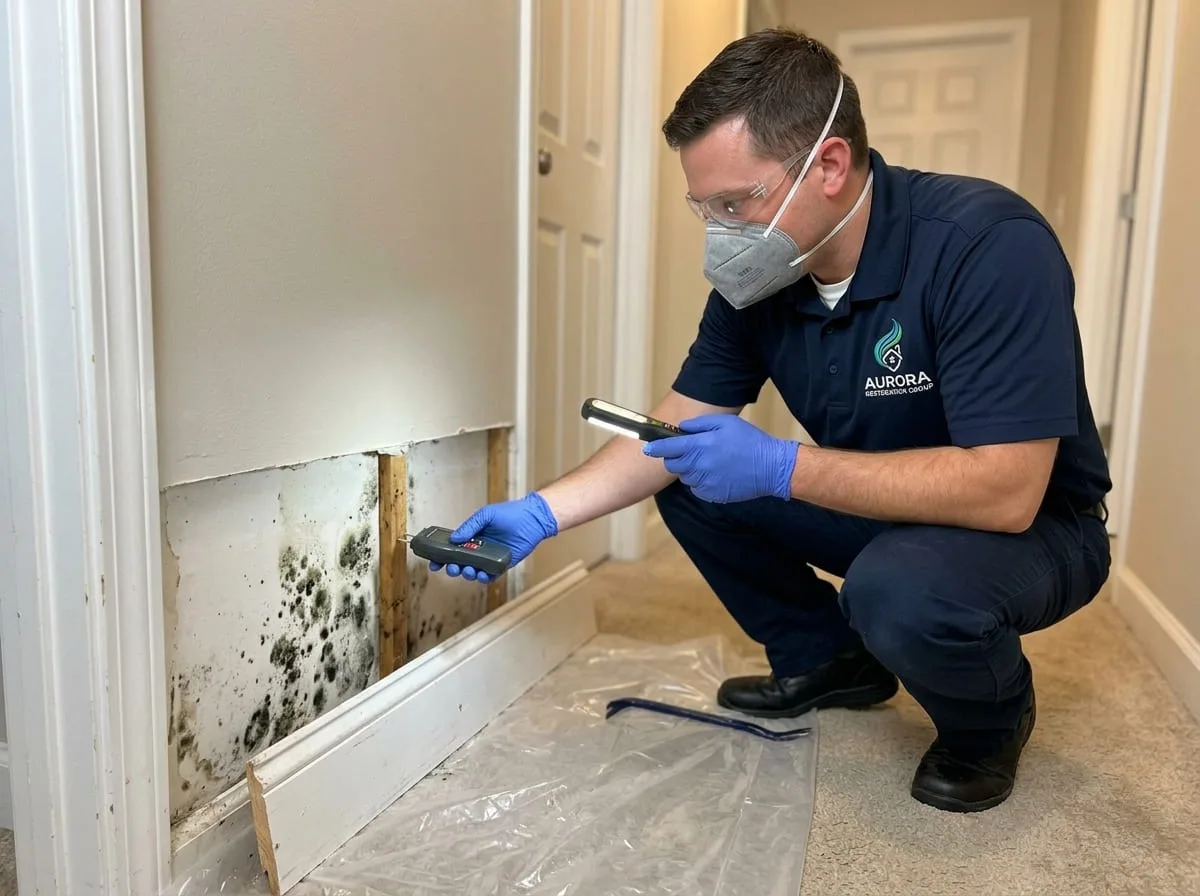
Work performed by licensed and insured restoration professionals typically starts with an inspection to map the extent of moisture and visible growth, followed by containment to keep spores from spreading to unaffected areas. Affected porous materials that can't be reliably cleaned — certain drywall, insulation, or carpet padding — are removed, while non-porous and structural materials are cleaned and treated where possible.
Once remediation work is complete, the area is dried down and, where warranted, verified with post-remediation testing before the space is considered clear. Every call is routed to experienced restoration crews serving Aurora who carry the equipment and certifications this kind of work requires.
Mold Services in Aurora
The pages below cover the specific mold situations Aurora property owners run into most often, from a leak that's just been discovered to the testing that confirms a job is finished.
- Mold After Water Damage
- Basement & Crawl Space Mold Remediation
- Black Mold Remediation
- Residential Mold Remediation
- Commercial Mold Remediation
- Mold Inspection
- Mold Testing & Sampling
- Post-Remediation Verification & Clearance Testing
Residential and Commercial Mold Situations
Homes and businesses see many of the same underlying causes, but the scale and stakeholders differ. A single-family home usually involves one owner and one insurance policy, while a commercial building may involve a property manager, multiple tenants, and lease terms that assign maintenance responsibilities in specific ways.
What Homes Typically Need
Residential jobs generally focus on a specific room or area — a basement, bathroom, or attic — and on getting the household back to normal with as little disruption as possible. See residential mold remediation for more.
What Commercial Properties Typically Need
Commercial jobs more often require phased containment so parts of a building can stay in use, along with documentation to support insurance claims and tenant communication. See commercial mold remediation for more.
Related Water Damage Services
Because mold in Aurora almost always follows a water event, fast, thorough water damage response is the best prevention available. See the water damage restoration overview and the dedicated page on mold prevention and moisture control for what happens in the hours and days right after a leak or flood.
If you're trying to understand timing after a recent water event, the article on how quickly mold can become a concern after water damage walks through the general timeline. You can also browse Aurora service areas for neighborhood-specific coverage across the city.
Frequently Asked Questions
Does Aurora's dry climate mean mold isn't a concern here?+
It means the cause is different, not that the risk is zero. Aurora's semi-arid climate doesn't generate the ambient, humidity-driven mold growth common in humid regions, but any home can develop mold once materials stay wet after a leak, storm intrusion, or plumbing failure. The trigger here is almost always a specific water event rather than everyday air moisture.
How can I tell if a past water problem has turned into mold?+
Common signs include a persistent musty odor, discoloration or staining on drywall, baseboards, or subfloor, and visible fuzzy or speckled growth in areas that got wet. If you had a leak, roof intrusion, or flooding and any of these show up afterward, it's worth having the area inspected.
Is mold remediation covered by homeowners insurance?+
Coverage depends on your specific policy and the cause of the moisture. Mold connected to a sudden, covered water damage event is more commonly covered than mold linked to long-term neglect or maintenance issues. The receiving contractor can assist with insurance claim documentation as part of the remediation process.
How long does mold remediation typically take?+
Timelines vary with the size of the affected area, how many materials need to be removed, and whether the moisture source has been fully corrected first. Smaller, contained jobs may wrap up in a few days, while larger basement or multi-room situations take longer.
Can I stay in my home during mold remediation?+
Often yes, especially for localized work, since containment barriers isolate the work area from the rest of the home. For more extensive remediation, the professionals handling the job will advise whether temporary relocation makes sense while containment and air scrubbing are in place.