What a House Fire Leaves Behind in Aurora
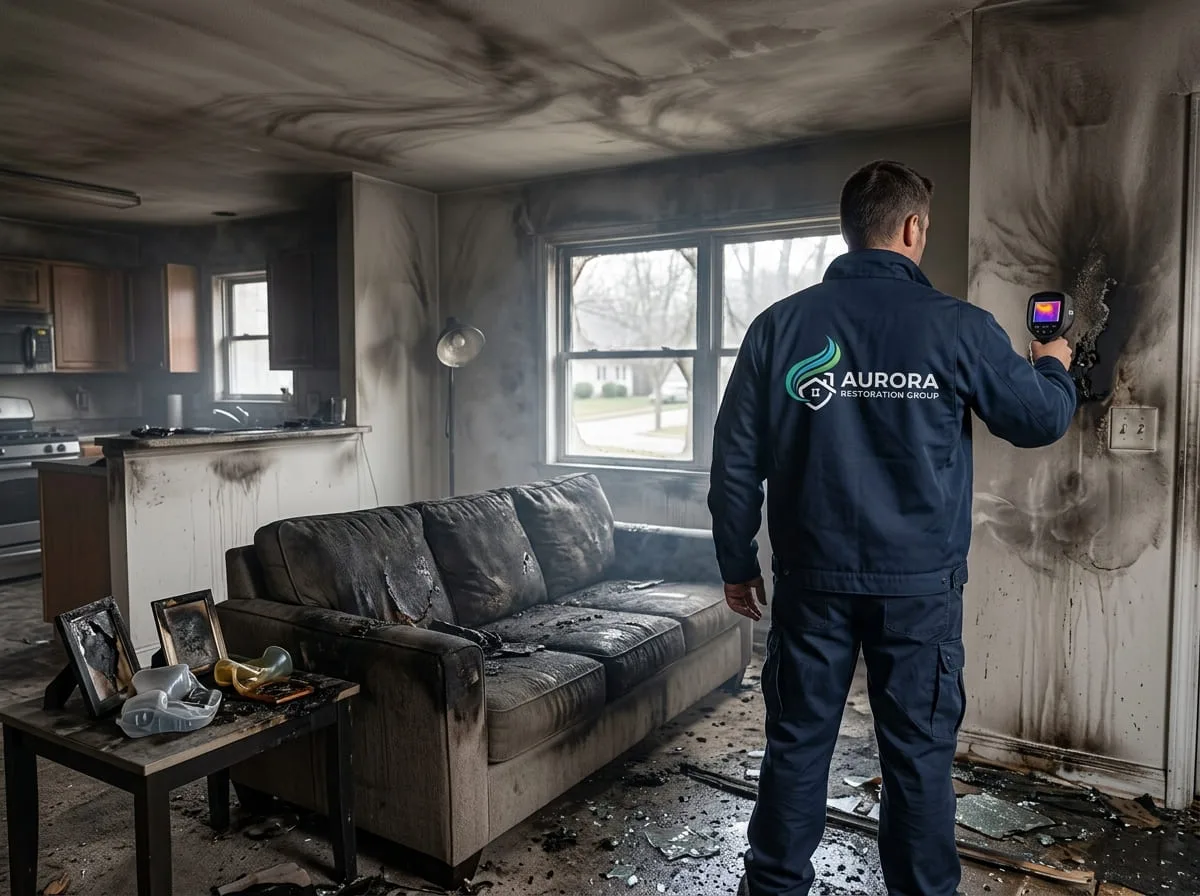
A structure fire rarely damages only the room where it started. Heat, smoke, and soot travel through hallways, HVAC ducts, and wall cavities long before flames reach them, and the water used to knock the fire down adds a second layer of damage on top of the first.
The Fire Is Rarely the Whole Story
By the time a fire is extinguished, most Aurora homes are dealing with three separate problems at once: structural loss in the fire's direct path, smoke and soot residue spread throughout the building, and standing or absorbed water from suppression efforts.
Every Hour Without Mitigation Adds Cost
Soot residue is mildly acidic and begins etching metal, grout, and painted surfaces within hours. Smoke odor sets more deeply into drywall, insulation, and fabric the longer it sits, and water left in place raises the risk of secondary damage like swelling wood and mold growth.
Local Conditions That Shape Fire Damage Restoration Here
A Dry, High-Plains Climate
Aurora sits at roughly 5,558 feet on Colorado's high plains, with a semi-arid climate and low relative humidity through most of the year. That dryness works against homeowners after a fire: dry indoor air lets fine soot and ash particles stay airborne and travel further than they would in a damp climate, and it can make smoke odor feel more persistent in furniture, carpet, and drywall.
Winter Heating and Freeze-Thaw Swings
Colorado's Front Range is known for sharp temperature swings, where chinook winds can push a mild spell above freezing before an arctic front drops temperatures back down within a day or two. That pattern drives heavier use of space heaters, fireplaces, and wood stoves during cold snaps, which are common sources of residential fires. When a fire happens during freezing weather, the water applied to control it can also refreeze on exterior surfaces, adding a complication that firefighting water damage cleanup has to account for.
A Housing Stock Spanning More Than a Century
Aurora's homes range from early-to-mid-20th-century houses around Original Aurora and the historic Fletcher townsite to mid-century tract homes in neighborhoods like Hoffman Heights, and on to master-planned communities built with modern materials near the city's eastern edge. Older homes are more likely to have legacy wiring, plaster walls, and older HVAC systems, which changes how smoke and soot spread and how a rebuild is approached.
What Happens During Fire Damage Restoration
Emergency Response and Securing the Structure
The first priority after the fire department clears a scene is securing it against weather and unauthorized entry, typically through emergency board-up and tarping for broken windows, damaged doors, and compromised roof sections.
Removing Water Used to Fight the Fire
Most fires involve significant water from hose lines or sprinklers. Firefighting water damage cleanup follows the same extraction and structural drying principles used in broader water damage restoration, including moisture mapping and monitored drying equipment.
Smoke, Soot, and Odor Mitigation
Once the structure is dry, technicians address soot removal, broader smoke damage cleanup, and smoke odor removal and deodorization for surfaces, HVAC systems, and porous materials that absorbed odor.
Contents, Repairs, and Reconstruction
Salvageable belongings typically go through contents cleaning and pack-out while the structure is repaired. Fire damage repairs and reconstruction covers everything from drywall and flooring to full rebuilds handled under a general contractor license.
Residential and Commercial Fire Damage
House fires and business fires both call for the same core mitigation steps, but commercial properties add business-interruption pressure, larger volumes of contents and equipment, and code compliance considerations. Commercial fire damage restoration covers what changes when the property is a business rather than a home.
Insurance and Next Steps
Insurance claim assistance is available through the restoration contractor a call is routed to, including documentation of damage and coordination with adjusters. Property owners are generally better off avoiding extensive DIY cleanup before a professional assessment, since some materials that look salvageable may need testing or removal.
Signs a Property Needs Professional Fire Damage Restoration
A strong smoke smell that persists after airing the property out, a visible haze or film on surfaces in rooms away from the fire, and any water pooling on floors or ceilings are all signs that professional mitigation is worth calling in rather than waiting to see if the smell fades on its own.
What to Expect on the First Call
A first call typically covers the basics: what happened, which areas were affected, whether the fire department has released the scene, and whether the water used to fight the fire is still present. That information helps determine how quickly a crew needs to be on site.
Explore Fire Damage Restoration Services
Every stage of fire recovery, from the first call to the final repair, is covered under this service line:
- Emergency Fire Damage Restoration
- Smoke Damage Cleanup
- Soot Removal
- Smoke Odor Removal & Deodorization
- Firefighting Water Damage Cleanup
- Commercial Fire Damage Restoration
- Emergency Board-Up & Tarping
- Contents Cleaning & Pack-Out
- Fire Damage Repairs & Reconstruction
Fire damage often overlaps with other property damage categories. If flooding or a slow leak contributed to the loss, water damage restoration and mold remediation cover related concerns, and the service areas page lists coverage across the Denver metro, including Denver and Centennial.
Frequently Asked Questions
What should I do immediately after a house fire in Aurora?+
Once the fire department confirms it's safe, avoid re-entering rooms with structural damage and skip household cleaners on soot, since they tend to smear it deeper into surfaces. Calling for professional board-up and an assessment protects the property until restoration can begin.
Is water damage from firefighting efforts handled differently than flood damage?+
The extraction and drying steps are similar, but firefighting water usually carries soot and debris, so it's treated as part of the fire loss. See firefighting water damage cleanup for how that's handled.
Can smoke odor be completely removed from a home?+
In most cases, yes, once affected materials are cleaned or, where necessary, replaced and porous items are properly treated. Heavily charred or saturated materials sometimes need removal rather than deodorization alone.
Will homeowners insurance cover fire damage restoration in Aurora?+
Most homeowners policies cover sudden fire loss, and insurance claim assistance is available through the restoration contractor to help document damage. Specific coverage depends on the individual policy.
How is a commercial fire loss different from a residential one?+
Commercial properties usually involve larger contents volumes, equipment, and code requirements, and business interruption adds urgency. See commercial fire damage restoration for specifics.
Is fire damage help available outside normal business hours?+
Yes. Fire damage response is coordinated 24 hours a day, seven days a week, since fires and the water damage that follows don't wait for business hours.