
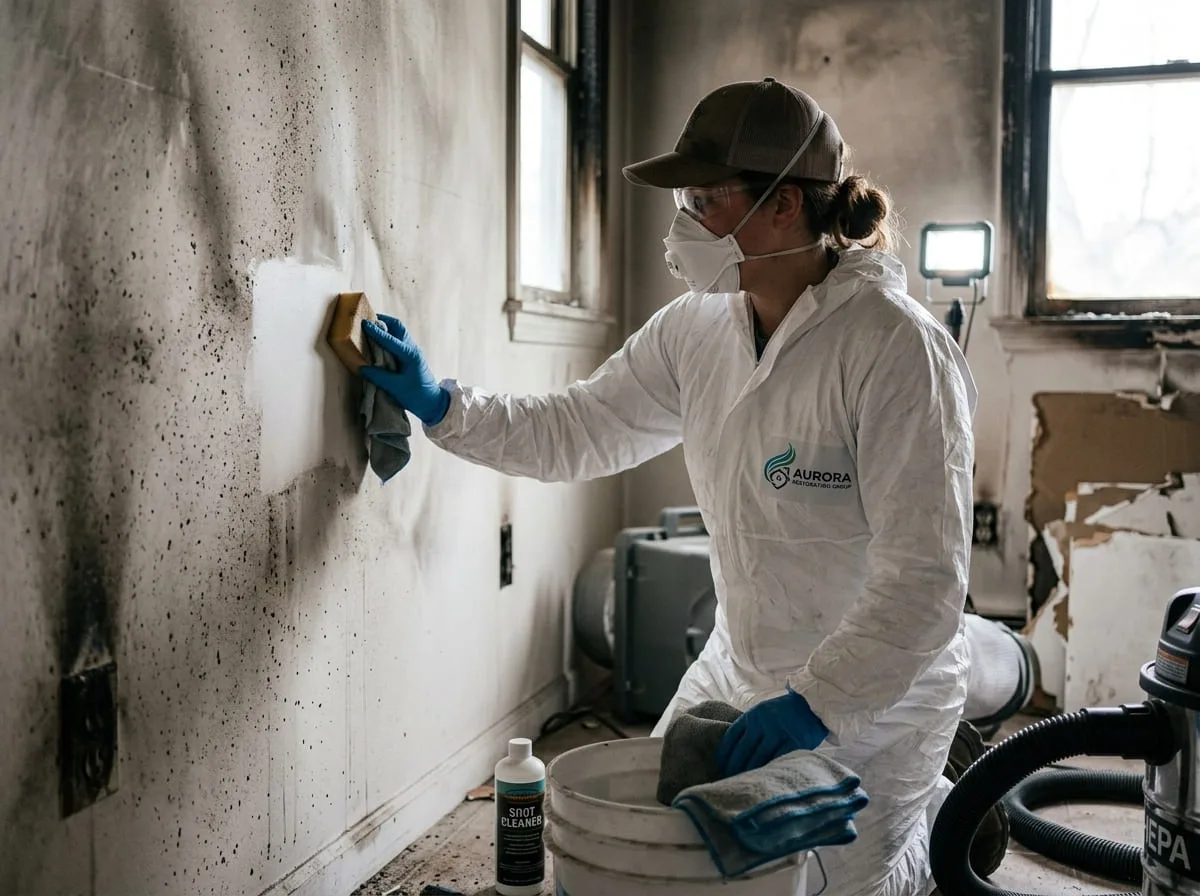
Why Smoke Odor Is Hard to Get Rid Of
Smoke odor isn't just a smell sitting on top of a surface. The compounds that cause it get absorbed into porous materials like drywall, insulation, carpet padding, and fabric, which is why air fresheners and surface cleaning alone rarely solve the problem for long.
Where Odor Tends to Hide
Wall cavities, HVAC ductwork, carpet padding, and the inside of furniture cushions are common spots where odor lingers well after visible soot and smoke residue have been cleaned from surfaces.
How Professional Deodorization Works
Source Removal First
Effective odor treatment starts with removing or cleaning the materials actually holding the odor, since masking a smell without addressing its source is a temporary fix at best.
Air Scrubbing and Filtration
Commercial-grade air scrubbers with specialized filtration help remove airborne odor-causing particles from a space while other work continues, improving air quality during the restoration process.
Thermal Fogging and Vapor Treatments
For odor that's penetrated deep into materials, thermal fogging equipment carries deodorizing agents into the same crevices and pores that smoke reached in the first place, neutralizing odor rather than covering it up.
Sealing and Encapsulation
Some surfaces, particularly framing and subfloor exposed to heavy smoke, may need an odor-blocking sealer applied before painting or finishing to prevent odor from bleeding back through over time.
HVAC Systems and Odor
Because HVAC systems circulate air throughout a building, they're a common reason smoke odor seems to return after cleaning. Duct cleaning and filter replacement are often necessary steps, not optional extras, when a home's HVAC system ran during or shortly after a fire.
When Materials Can't Be Deodorized
Heavily saturated materials, such as insulation that absorbed smoke for an extended period or carpet padding beneath a fire's path, sometimes can't be fully deodorized and need to be removed rather than treated. Being upfront about that during assessment saves time and avoids paying for treatments unlikely to hold.
Odor Removal for Contents vs. the Structure
Structural odor treatment and contents cleaning and pack-out often run in parallel: the building is treated on-site while furniture, clothing, and other belongings are cleaned and deodorized separately, sometimes with equipment better suited to those materials.
Hidden Moisture and Lingering Odor
Odor complaints sometimes trace back to moisture trapped behind walls or under flooring after firefighting efforts, rather than to smoke alone. The article on hidden moisture after a house fire covers why that moisture matters and how it connects to lingering smells.
Aurora's Dry Climate and Odor Perception
Aurora's low humidity can make smoke odor feel more concentrated indoors, since dry air doesn't dilute airborne particles the way humid air can. That's part of why a professional assessment, rather than open windows and time, is usually the more reliable path to a fully deodorized home.
Residential and Commercial Deodorization
Businesses often have larger HVAC systems and more materials to treat, which can extend the deodorization timeline compared to a typical home. See commercial fire damage restoration for what changes in a business setting.
How Long Odor Treatment Typically Takes
Light odor confined to one room after a quickly extinguished fire can often be treated within a day or two. Whole-house odor from a larger fire, particularly one involving synthetic materials or extended smoldering, takes longer, since it usually means more surfaces, more HVAC ductwork, and sometimes more than one treatment pass.
Why a Second Treatment Pass Is Sometimes Needed
Odor can seem resolved immediately after treatment, only to reappear faintly once humidity, temperature, or airflow changes in the home. A follow-up inspection a few days after initial treatment helps confirm the work actually held rather than assuming it did.
Testing for Remaining Odor
Technicians often rely on a combination of visual inspection, moisture readings, and simple sensory checks across different times of day, since odor perception can shift with temperature and humidity. This is part of why deodorization is treated as a process with a verification step, not a single spray-and-done service.
Odor in Carpet, Padding, and Flooring
Carpet and the padding beneath it are among the most odor-retentive materials in a home, since padding acts almost like a sponge for airborne particles during a fire. In many cases, carpet can be cleaned and salvaged while the padding underneath needs replacement, since padding is harder to treat effectively than the visible carpet fiber above it.
Hard Flooring Beneath Damaged Carpet
Once carpet and padding are pulled up, the subfloor or hard flooring underneath sometimes needs its own odor treatment, particularly if moisture from firefighting efforts reached that layer as well.
Odor Complaints After Cleanup Is "Done"
Occasionally, odor is reported weeks after a project wraps up, usually tied to a seasonal change in humidity or heating that reactivates a source that wasn't fully addressed the first time. Revisiting the affected area rather than assuming the smell is unrelated to the original fire is generally the right first step in that situation.
Related Services
Odor treatment typically follows smoke damage cleanup and soot removal, since cleaning surfaces first makes deodorization more effective on what remains. For the complete recovery process, see the fire damage restoration overview.
Frequently Asked Questions
Why does smoke odor come back after I've cleaned surfaces?+
Odor compounds absorb into porous materials like drywall, insulation, and carpet padding, so surface cleaning alone often leaves a source that keeps releasing smell over time.
How long does professional deodorization take?+
It depends on how deeply odor has penetrated materials and how large the affected area is; light odor in one room takes far less time than whole-house treatment after a significant fire.
Can furniture and clothing be deodorized, or do they need to be replaced?+
Many textiles and furnishings can be cleaned and deodorized through specialized contents cleaning, though heavily saturated or charred items sometimes need to be discarded.
Does my HVAC system need to be cleaned as part of odor removal?+
In most cases yes, since ductwork circulates smoke odor throughout a building. Skipping duct cleaning is a common reason odor seems to return after treatment.
Is thermal fogging safe to use in an occupied home?+
Thermal fogging is typically done while the space is unoccupied, and technicians will advise on timing and any precautions needed before residents return.