
Why Burst Pipes Are a Recognized Local Risk
Colorado's Front Range is known for large, rapid temperature swings, sometimes more than 40 degrees Fahrenheit within a single day, driven partly by chinook-style downslope winds. These winds can push winter temperatures well above freezing for a day or two before a hard arctic cold front drops them back down sharply.
That freeze-thaw-freeze pattern is a recognized driver of frozen and burst pipes in the Denver metro area, including Aurora. A pipe that partially thaws during a mild spell and then refreezes during a fast-moving cold snap is more prone to cracking than one exposed to steady, predictable cold. Local restoration and plumbing companies specifically flag this cycle, distinct from simple sustained cold, as a leading cause of pipe failures.
Which Homes Are Most at Risk
Exterior-Wall Plumbing and Older Construction
Homes with supply lines routed through exterior walls, or with less insulation typical of older construction, are more exposed during a hard freeze. In neighborhoods like Original Aurora, this can be compounded by original or long-since-replaced plumbing materials.
Unheated Crawl Spaces and Basements
Unfinished basements are common throughout Colorado, and they often contain exposed, sometimes uninsulated supply and drain lines. Unheated crawl spaces carry a similar risk, since pipes there aren't protected by the conditioned air of the living space above. See crawl space water damage for that scenario specifically.
Vacant or Under-Heated Properties
A property with the thermostat set low during a cold snap, whether vacant, for sale, or simply unoccupied for a stretch, loses one of the simplest protections against freezing: consistent indoor heat.
What to Do When a Pipe Bursts
Shutting off the main water valve is the single most effective step to limit damage once a pipe has burst. From there, moving away from standing water near outlets or panels and calling for emergency extraction are the next priorities. A detailed walkthrough is available at burst pipe cleanup before crews arrive.
The Restoration Process for Burst Pipe Damage
Extraction and Source Confirmation
Once the water is shut off, technicians confirm the source and extent of the leak, since burst pipes inside walls or ceilings can travel further than the visible damage suggests before crews arrive.
Drying Walls, Floors, and Framing
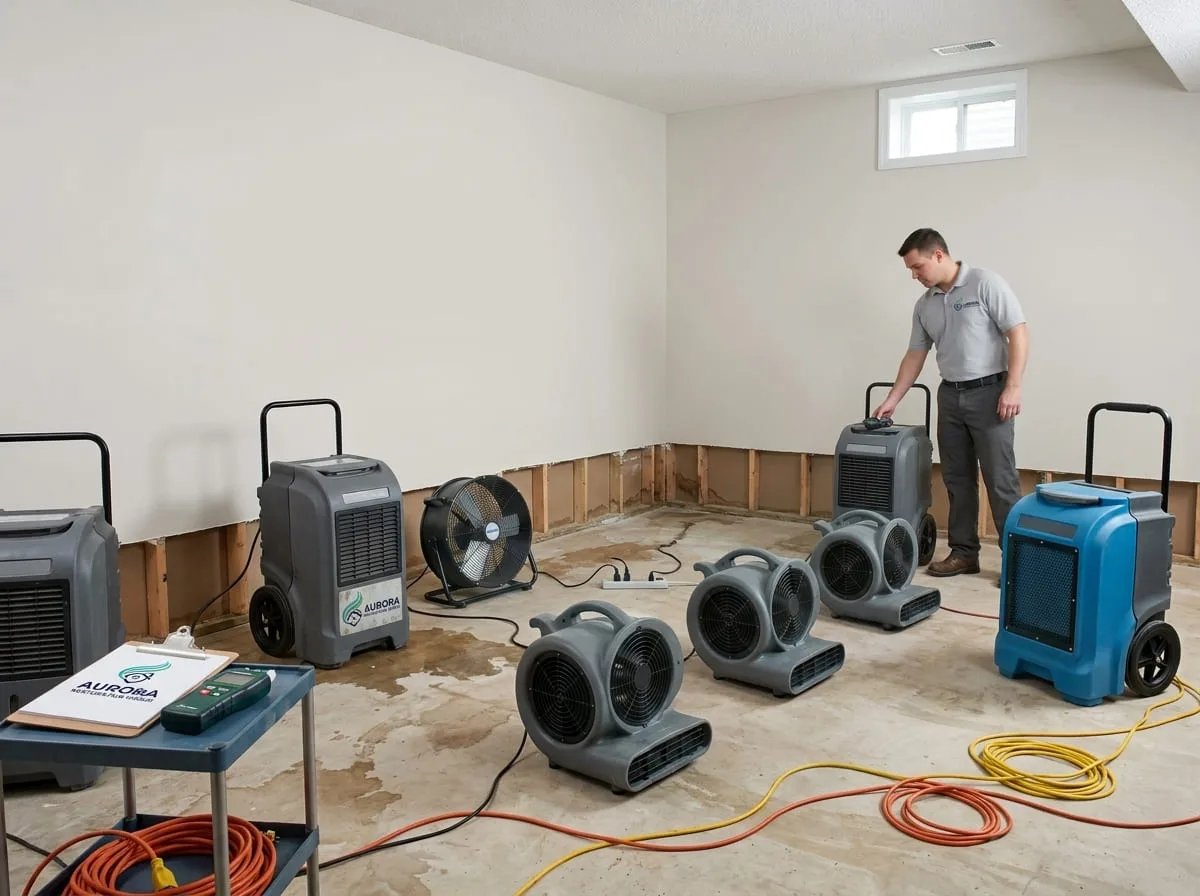
Because burst-pipe water is typically clean supply-line water, materials can often be dried in place rather than removed, provided drying starts promptly. See structural drying and dehumidification for how that process works.
Repairing Ceilings and Walls
Burst pipes above a ceiling or inside a wall cavity frequently cause visible drywall damage even after drying is complete. See ceiling and wall water damage for how that repair work is scoped.
Signs a Leak Might Be Inside a Slab or Wall
An unexplained increase in a water bill, the sound of running water when everything is off, or a warm spot on a slab floor can all point to a hidden leak rather than a dramatic burst. These situations benefit from the same moisture-tracing approach used for a visible burst pipe, just started earlier in the process.
When Burst Pipes Are Most Common in Aurora
Calls tend to cluster around sharp cold snaps, particularly when a stretch of mild, chinook-driven weather precedes a fast-moving arctic front. That pattern, rather than steady winter cold alone, is what local restoration and plumbing companies point to as the bigger driver of pipe failures in the Denver metro area.
Insurance and Burst Pipe Claims
A sudden pipe burst is typically treated as a covered peril under a standard homeowners policy, unlike gradual leaks that developed over time without being addressed. Insurance claim assistance is available through the receiving restoration contractor to help document the sudden nature of the failure and the resulting damage.
Reducing Burst Pipe Risk Going Forward
Insulating Exposed Plumbing
Pipes in crawl spaces, unheated basements, or exterior walls benefit from added insulation, which reduces how much they're affected by outdoor temperature swings.
Maintaining Consistent Indoor Heat
Keeping a consistent thermostat setting during a cold snap, rather than letting indoor temperatures drop overnight, is one of the simpler steps homeowners can take, particularly for a vacant or seasonal property.
Burst Pipes in Basements and Crawl Spaces
Because unfinished basements are common throughout Aurora, a large share of burst pipe calls involve exposed supply or drain lines in these below-grade spaces. See basement water damage and flooded basement cleanup for the broader picture of below-grade water damage beyond just plumbing failures.
What Happens if a Burst Pipe Goes Unnoticed for Days
A leak inside a wall or under flooring that isn't discovered right away can lead to more extensive drywall, insulation, and flooring damage than an immediately noticed burst, along with a higher chance that mold becomes a secondary concern. An inspection at that point typically covers a wider area than the visible damage suggests.
Burst Pipes vs. Slow Leaks
A burst pipe is a sudden, dramatic event, while a slow leak from a failing fitting or a small crack can drip for weeks before it's noticed. Both are handled with the same extraction and drying principles once discovered, but a slow leak's cause may need a closer look, since it can indicate a broader plumbing issue rather than a single isolated failure point.
After the Repair: Watching for Recurrence
Once a burst section of pipe is repaired and the area is dry, it's worth keeping an eye on nearby fittings and connections during future cold snaps, particularly if the original failure was tied to a documented freeze-thaw event rather than a one-off manufacturing defect.
Frequently Asked Questions
Why are burst pipes so common in Aurora during winter?+
Colorado's chinook winds create rapid freeze-thaw-freeze cycles rather than steady cold, and pipes that partially thaw before refreezing during a fast-moving cold front are more prone to cracking than pipes exposed to consistent cold temperatures.
What's the first thing I should do if a pipe bursts?+
Shut off the main water supply as quickly as possible, then avoid contact with standing water near outlets or electrical panels. Calling for emergency extraction right away limits how far the water spreads into flooring and walls.
Can I prevent frozen pipes in an Aurora home?+
Keeping consistent indoor heat during cold snaps, insulating exposed pipes in crawl spaces and exterior walls, and letting faucets drip during extreme cold are common precautions, though no measure eliminates risk during a severe freeze-thaw event.
Is burst pipe water considered clean water?+
Supply-line water is generally clean at the moment of the break, which often allows more materials to be dried in place rather than removed. That can change if the water sits long enough to pick up contamination from building materials.
Will a burst pipe damage my ceiling even if the pipe is in the wall?+
Yes, water travels along the path of least resistance and commonly follows framing down into ceilings below, even when the actual break is higher up or in an adjacent wall. That's why an inspection often covers more area than the visible stain.