
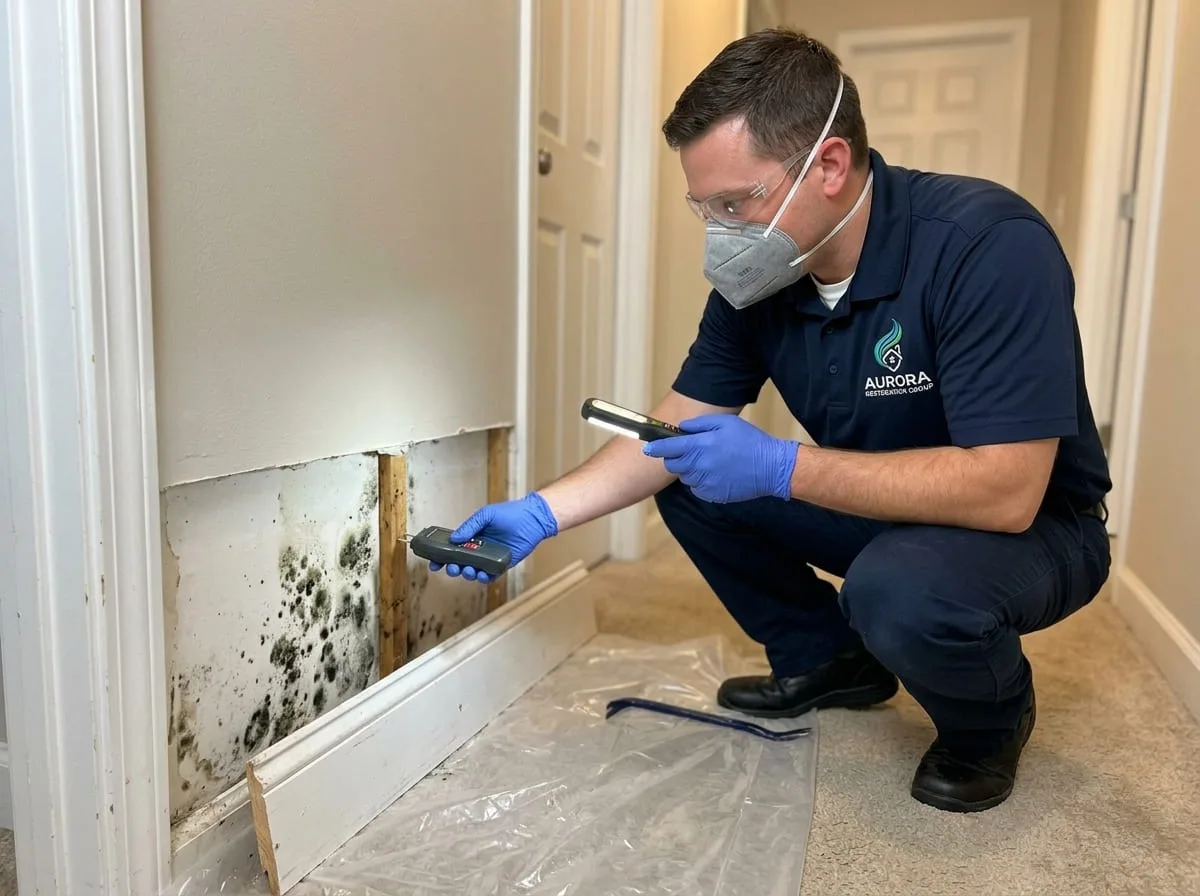
When an Aurora Property Needs a Mold Inspection
A mold inspection is the assessment step that determines whether a moisture problem has led to mold growth, how far it extends, and what kind of remediation, if any, is needed. It's typically the right first move whenever mold is suspected but not yet confirmed.
After a Water Event
Any home or business that experienced a leak, roof intrusion, or flooding — especially if drying was delayed — is a candidate for inspection, even if there's no visible growth yet. See mold after water damage for more on that connection.
Musty Odors Without an Obvious Source
A persistent musty smell without any visible sign of water damage often points to hidden moisture behind a wall, under flooring, or in a crawl space. An inspection can help locate the source rather than leaving it to guesswork.
Real Estate Transactions
Buyers, sellers, and agents sometimes request a mold inspection as part of due diligence before closing on a property, particularly for older homes or those with a history of water damage.
What a Mold Inspection Involves
Visual Assessment
An inspector examines visible areas for signs of moisture damage, staining, and growth, paying particular attention to basements, crawl spaces, bathrooms, attics, and any area with a known history of water intrusion.
Moisture Mapping
Moisture meters and, in some cases, thermal imaging help identify damp materials that aren't visibly wet or discolored yet, which is especially useful for catching a problem before it becomes extensive.
Deciding Whether Sampling Is Needed
Not every inspection requires lab sampling. If visible growth and moisture evidence are clear enough to define a remediation scope, an inspector may recommend proceeding directly to remediation. When the picture is less clear, air or surface sampling can provide more specific information.
Inspection vs Testing
A mold inspection is a visual and moisture-based assessment, while mold testing involves collecting physical samples for lab analysis. They're often used together, but an inspection alone can be enough in straightforward cases. See mold testing and sampling for how sampling works when it is recommended.
What Happens After the Inspection
Following the inspection, the property owner typically receives a summary of findings, including the extent of any moisture or growth, likely source, and a recommended next step — whether that's remediation, further testing, or simply monitoring an area that doesn't yet show a problem.
If remediation is recommended, the mold remediation overview covers what that process generally involves, and the post-remediation verification and clearance testing page explains how the work gets confirmed once it's finished.
Tools and Methods Used During an Inspection
Moisture Meters
Pin and pinless moisture meters measure moisture content inside materials like drywall, wood framing, and subfloor, which helps identify damp areas that aren't yet showing visible staining or discoloration.
Thermal Imaging
Infrared cameras can highlight temperature differences associated with moisture behind walls or ceilings, giving inspectors another way to flag areas that warrant closer physical investigation.
Borescopes for Wall Cavities
In some cases, a small camera inserted through a minimal access point can give a direct look inside a wall cavity without the need for larger, more invasive openings, which is useful when moisture is suspected but not confirmed.
How Often Should a Property Be Inspected?
There's no fixed schedule that applies to every property. Most inspections are triggered by a specific event — a known leak, a musty odor, or a real estate transaction — rather than done on a routine calendar basis, though older homes with a history of water issues may benefit from periodic checks of high-risk areas like basements and crawl spaces.
For a home or business that's had a recent leak or storm-related roof damage, an inspection sooner rather than later gives the best chance of catching a problem before it grows into a larger remediation job. See mold after water damage for the specific timeline concerns that follow a leak.
Preparing for an Inspection Visit
Note Any Known History
Sharing details about past leaks, roof repairs, or previous mold issues helps an inspector focus on the areas most likely to be affected, rather than starting from scratch on a large property.
Provide Access to Key Areas
Clearing access to basements, crawl space entries, attics, and areas around plumbing fixtures allows a thorough inspection without unnecessary delays on the day of the visit.
Residential and Commercial Inspections
The core inspection methods are the same for homes and commercial buildings, but a commercial property may involve a larger footprint, multiple tenant spaces, and shared building systems that need to be checked as part of a complete assessment. See commercial mold remediation for more on that side of the work.
After the Inspection Report
A written summary gives property owners something concrete to act on, whether that means scheduling remediation, arranging additional sampling, or simply documenting that an area was checked and found to be within normal limits at the time of the visit.
Homeowners preparing to sell, or buyers evaluating a purchase, often use this report alongside other inspection findings to make informed decisions before a transaction closes.
Inspecting Homes Across Aurora's Housing Stock
An inspector working in a home near the historic Fletcher townsite will typically spend more time on legacy plumbing runs and older basement finishes, while a visit to a newer home near Painted Prairie or the Aurora Highlands focuses more on roof penetrations, appliance connections, and grading around the foundation. The inspection method is the same; where attention goes tends to shift with the age of the construction.
Frequently Asked Questions
What's the difference between a mold inspection and mold testing?+
An inspection is a visual and moisture-based assessment of a property. Mold testing involves collecting air or surface samples for lab analysis to confirm what's present. An inspection often determines whether testing is even necessary.
How long does a mold inspection take?+
Most residential inspections can be completed in a single visit, though the exact time depends on the size of the property and how many areas need to be checked.
Do I need a mold inspection if I can already see mold?+
It can still be useful, since visible growth doesn't always show the full extent of a problem. An inspection helps determine how far moisture has traveled beyond what's visible on the surface.
Is a mold inspection required for real estate transactions in Colorado?+
It isn't automatically required by law, but buyers, sellers, and agents often request one as part of due diligence, particularly for older homes or properties with a known history of water damage.
Does a mold inspection include lab sampling automatically?+
Not always. Sampling is recommended when the inspector needs more specific information than a visual and moisture assessment can provide, but many straightforward cases can proceed to remediation without it.