
Why the First Hour Matters
Water does not wait. It wicks up drywall, seeps under flooring, and soaks into insulation within minutes of a leak or overflow. The longer water sits, the more materials go from "dry out and reuse" to "remove and replace," and the more likely secondary problems like swelling, staining, and microbial growth become.
You do not need special training to take the right first steps. Most of what matters in the first hour is common sense applied quickly: get people safe, stop the source if you can, and start documenting before anything gets moved or thrown away.
Immediate Safety Steps
Check for Electrical Hazards First
Standing water and electricity do not mix. If water is pooling near outlets, baseboard heaters, or a water heater, and you can reach your electrical panel without stepping through water, shut off power to the affected area. If reaching the panel means walking through standing water, stay out and wait for someone qualified to do it safely.
Identify the Water Source
Before anything else, figure out where the water is coming from. A supply line under a sink, a failed water heater, an overflowing washing machine, and a roof leak all call for different immediate actions. If the source is a storm-damaged roof, water may keep entering during and after rain even after you have addressed the interior mess.
Stopping the Water and Limiting Its Spread
Shut Off the Water Supply
For a plumbing-related leak, locate the fixture's shutoff valve or the home's main water shutoff and close it. Every household member should know where the main shutoff is located before an emergency happens, since fumbling for it during an active leak costs valuable minutes.
Move Belongings and Contain the Area
Move furniture, rugs, electronics, and boxes off wet flooring and away from the affected area. Prop up furniture on blocks or foil if you cannot move it entirely. If water is coming through a ceiling, place a bucket underneath and, if you can do so safely, relieve pressure in a sagging ceiling with a small controlled puncture rather than letting it collapse on its own.
Documenting the Damage for Insurance
Photograph Everything Before You Touch It
Take wide photos of each affected room, then closer shots of visibly damaged items, flooring, walls, and the source of the leak itself. Video walkthroughs are useful too, since they capture context that individual photos can miss. Do this before you start moving items or wet-vacuuming, if it's safe to take even a minute or two first.
Keep a Written Timeline
Note when you discovered the water, what you believe caused it, and every step you took afterward, including when you shut off water or power and when you called for help. Insurance adjusters rely heavily on this kind of timeline, and it is much easier to write down details immediately than to reconstruct them days later.
Handling a Few Specific Scenarios
Water Heater Failure
A leaking or ruptured water heater can release its entire tank quickly, and older units are also gas-fired in many homes. If you smell gas along with the leak, treat that as the priority — leave the area and contact your gas utility before worrying about the water itself.
Slab Leaks
A slab leak, where a pipe running under the concrete foundation fails, often shows up as a warm or damp spot on flooring, a spike in your water bill, or the sound of running water when nothing is on. These are harder to shut off at the fixture level and usually require shutting off the main water supply until a plumber can locate and access the leak.
Appliance Supply Line Failures
Washing machines, dishwashers, and refrigerator ice makers all have supply lines that can fail, sometimes releasing water for hours if it happens while no one is home. Each appliance typically has its own shutoff valve behind or beneath it, which is worth locating before you ever need it in an emergency.
Protecting Family Members and Pets
Keep children and pets away from any area with standing water, exposed wiring, or a slippery wet floor, especially while you are still assessing the source. If the water may be contaminated — from a sewage backup or floodwater, for example — this matters even more, since contact with contaminated water carries real hygiene risks that a young child or pet won't recognize on their own.
Renters vs. Homeowners: A Quick Note
If you rent, notify your property manager or landlord immediately in addition to taking the safety steps above; many leases require prompt notice, and the property owner may need to coordinate the response. Homeowners generally have more direct control over calling a restoration provider right away, but the immediate safety and documentation steps are the same either way.
What Not to Do
A few common reactions actually make things worse rather than better:
- Do not run a household vacuum over standing water; it is not designed for it and creates a shock hazard.
- Do not turn on a ceiling fan or HVAC system if water has reached electrical fixtures or ductwork, since this can spread contamination and moisture into unaffected rooms.
- Do not throw away damaged items before photographing them, even if they seem obviously ruined.
- Do not assume carpet padding or drywall that "feels dry to the touch" is actually dry; surface-dry materials often hide trapped moisture underneath.
When to Call a Restoration Professional
Not every spill needs a professional response. A small, contained leak that you catch immediately and dry within a few hours with towels and a fan may be manageable on your own. Call for professional water extraction when any of these apply:
- Standing water covers more than a small area or has soaked into carpet, padding, or subfloor.
- The water may be contaminated (sewage backup, appliance overflow that sat for hours, or floodwater from outside).
- Water has traveled into wall cavities, ceilings, or between floors.
- You are unsure how long the water has been present, such as with a slow leak discovered late.
- The source was a burst or frozen pipe, which often means the volume of water released was significant. See our guide on burst pipe cleanup before crews arrive for source-specific steps.
What Happens After You Call
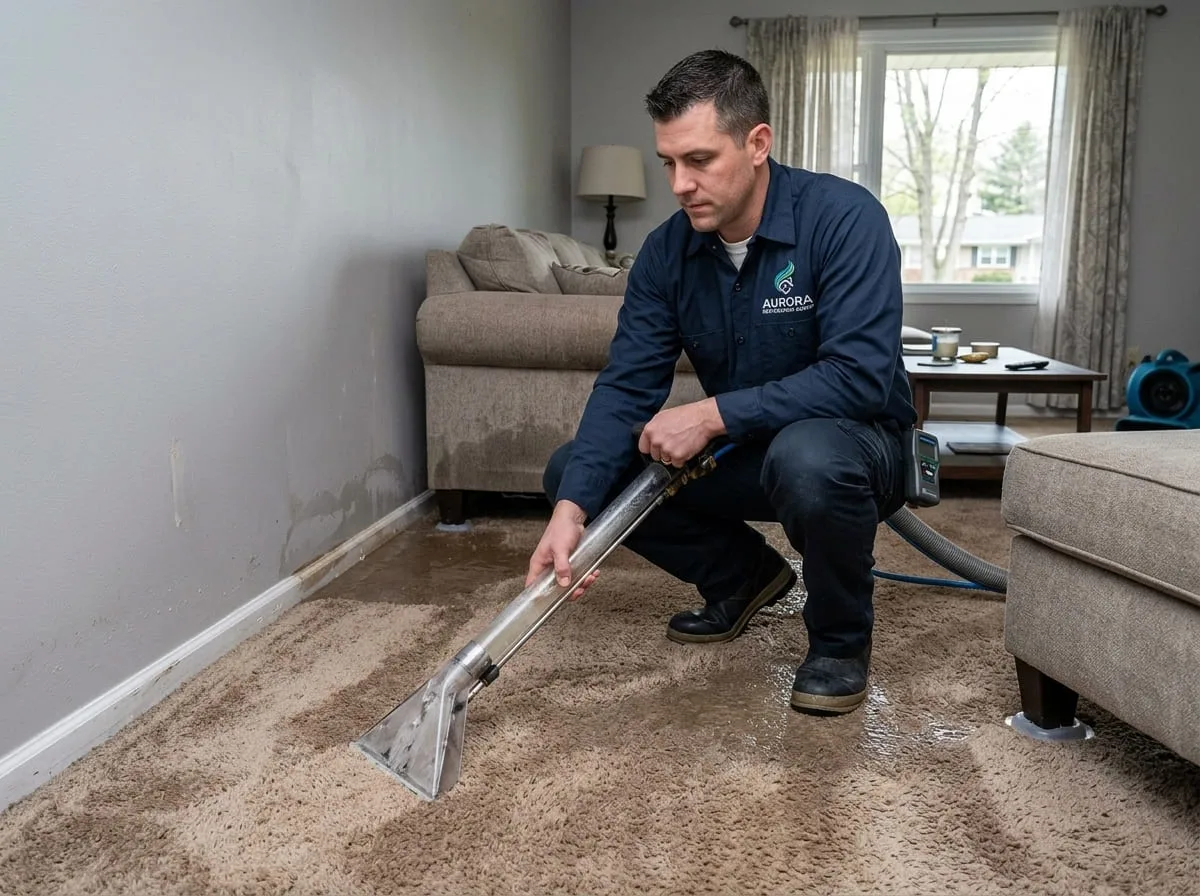
When you contact a restoration line, calls are routed to licensed, insured local crews equipped for 24/7 emergency response. Technicians arrive with moisture meters and thermal imaging to map how far water has traveled, then set up extraction and drying equipment before starting the structural drying process described in our guide to how long water damage takes to dry.
If the source has affected more than one room, or if the damage originated from roof or window intrusion after a hailstorm, professionals will also assess whether the water category has changed the scope of work. Our overview of water damage categories explains why that classification matters for both safety and insurance purposes.
In Aurora, a common scenario involves storm-damaged roofing that lets water into an attic or top-floor ceiling well after the hail event itself, since compromised shingles and flashing often are not obvious until the next rain. If you notice a new stain or drip after a hailstorm, treat it the same way as any other active leak: locate the source, contain what you can, document it, and get it evaluated before the next storm makes it worse.
Reducing the Odds of a Repeat Incident
After a Hail Event
Even if you don't see an active leak right after a hailstorm, it's worth having your roof looked at before the next rain, since compromised shingles and flashing are a common source of delayed leaks in Aurora's Hail Alley location. Catching roof damage before it leaks is far less disruptive than responding to water in an attic or ceiling later.
Before the Next Cold Snap
If your water damage traced back to a frozen or burst pipe, take the opportunity while repairs are underway to have exposed plumbing in unheated crawlspaces, basements, or exterior walls insulated. Colorado's chinook-driven freeze-thaw pattern, where a mild spell is followed by a sharp cold front, is a recurring stress on pipes that aren't well protected, and it's a pattern that repeats every winter rather than a one-time risk.
Frequently Asked Questions
How quickly should I act after discovering water damage?+
As fast as you safely can. Shutting off the water source and starting documentation within the first 30 to 60 minutes gives you the best chance of limiting how much material needs to be replaced rather than dried in place.
Is it safe to vacuum up standing water myself?+
Only with a wet/dry shop vacuum rated for liquids, and only if the area is free of exposed electrical hazards. A standard household vacuum is not designed for water and can create a serious shock hazard.
Should I turn off my home's electricity myself?+
If you can reach your electrical panel without stepping through water, shutting off power to the affected circuits is a reasonable safety step. If reaching the panel means walking through standing water, stay clear and wait for someone who can do it safely.
Can water damage wait until the next morning to be addressed?+
Waiting significantly increases the risk that materials like drywall, insulation, and flooring go from repairable to needing replacement. Even if a full restoration crew cannot start until morning, stopping the water source and starting extraction and airflow immediately still helps.
What if I noticed the leak after a hailstorm damaged my roof?+
Treat it as an active water intrusion issue even if the storm has passed. Damaged shingles, flashing, and skylights often leak during the next rain rather than immediately, so document the interior damage and have the roof and affected ceiling area inspected together.
Do I need to move out of my house while water damage is being addressed?+
Most residential water damage does not require leaving the home, though access to the affected room or floor may be limited while extraction and drying equipment is running. Larger losses involving contamination or structural drying may call for temporary relocation of specific areas.