Why Clearance Testing Comes After Remediation
Post-remediation verification, sometimes called clearance testing, confirms that remediation work achieved its goal before an area is closed back up or considered finished. It's the step that turns "we think it's done" into a documented result.
Confirming the Work Was Effective
Even careful remediation work benefits from a final check, since it verifies that removal, cleaning, and drying addressed the problem rather than assuming it based on how the space looks.
Independence From the Remediation Crew
Where clearance testing involves lab sampling, samples are typically sent to an accredited third-party laboratory rather than assessed by the crew that performed the remediation, which keeps the results independent of the work being verified.
What Clearance Testing Involves
Visual Re-Inspection
A visual check confirms that all agreed-upon materials were removed or treated, surfaces appear clean, and there's no obvious sign of remaining growth or moisture in the work area.
Post-Remediation Air and/or Surface Sampling
Depending on the scope of the original job, air sampling, surface sampling, or both may be collected from the remediated area and, often, an unaffected comparison area, then sent for lab analysis. See mold testing and sampling for more on how these methods work.
What a Passing Clearance Result Means
A passing result generally indicates that conditions in the remediated area are consistent with a normal, non-elevated environment for that type of space. It's a specific, documented data point rather than a guarantee about the space indefinitely, since new moisture events can always introduce new risk.
What Happens If an Area Doesn't Pass
If clearance results indicate remaining moisture or growth, additional remediation work is typically performed in the specific area of concern, followed by another round of verification. This is a normal part of the process for more complex jobs rather than a sign that something went wrong initially.
Documentation for Insurance and Real Estate
A written clearance report, often paired with lab results, gives property owners documentation for insurance claims, real estate transactions, or their own records. Insurance claim assistance is available through the receiving contractor to help put this documentation together.
For the full picture of what leads up to this stage, see the mold inspection and mold remediation overview pages, or residential mold remediation for how clearance fits into a typical home remediation job.
Timing Clearance Testing Correctly
Waiting for Materials to Fully Dry
Sampling too soon, before treated materials and the surrounding area have fully dried, can produce results that don't accurately reflect the finished job. Restoration professionals typically wait until drying is complete before scheduling clearance testing.
Coordinating With Reconstruction
For jobs that involve replacing drywall, flooring, or other finishes, clearance testing generally happens before those materials go back in, since it's far more practical to address a failed result before walls are closed up than after.
What a Clearance Report Typically Includes
A clearance report generally documents the areas tested, the sampling methods used, the lab results, and a summary comparing conditions in the remediated area to a reference or baseline sample. This gives property owners, insurers, and any future buyers a clear record of the work and its outcome.
After a Passing Result
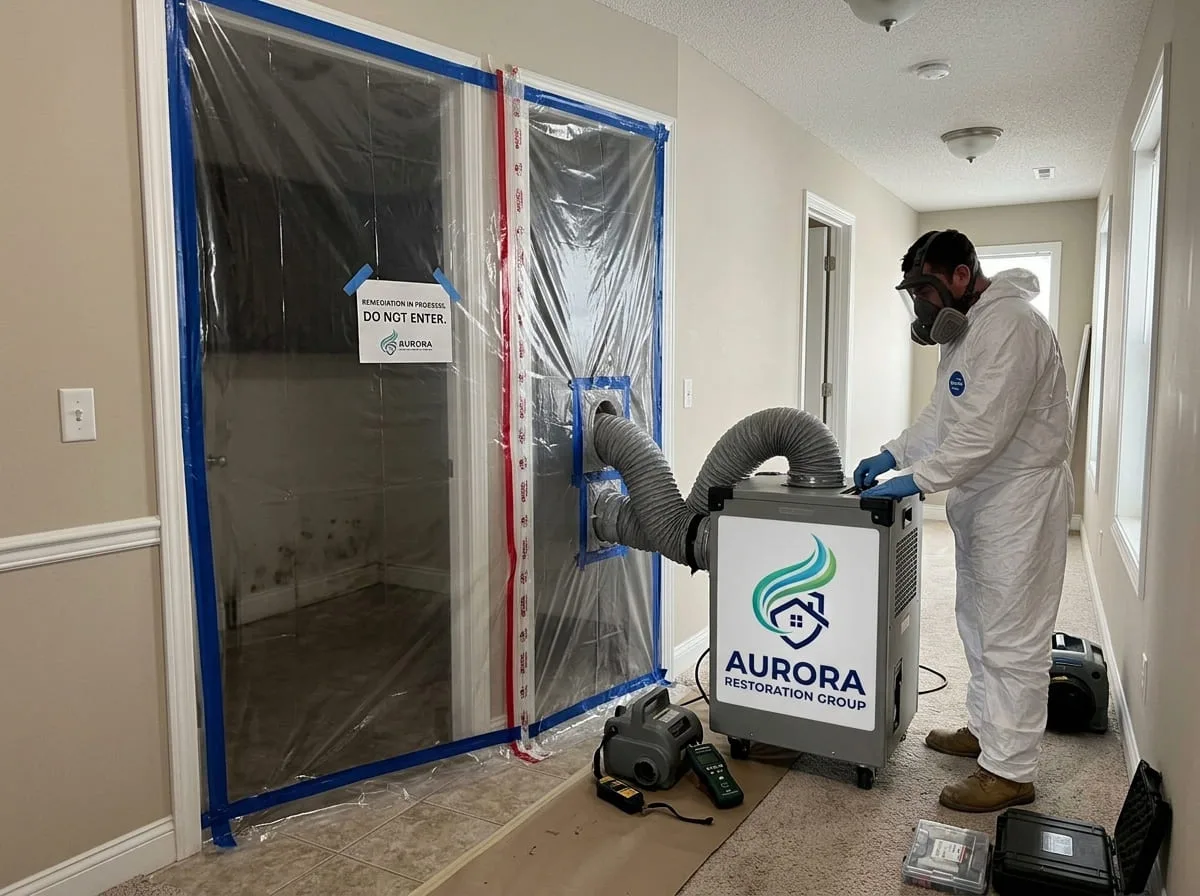
Once an area passes clearance testing, reconstruction or finish work can typically proceed, and containment barriers come down. It's still worth keeping an eye on the original moisture source going forward, since a passing result confirms the remediation, not a guarantee against a future, unrelated water event.
Clearance Testing for Different Property Types
Residential Clearance
For a single-family home, clearance testing typically covers the specific rooms or areas that were remediated, along with a comparison sample from an unaffected part of the home.
Commercial Clearance
Commercial buildings, especially those with shared HVAC systems, may need a broader sampling plan to confirm that remediation in one area didn't leave related issues in adjoining or connected spaces. See commercial mold remediation for more on how that scale of work is handled.
Frequently Overlooked Details
Property owners sometimes assume clearance testing happens automatically as part of remediation. In practice, it's often a distinct step that should be discussed and scheduled specifically, particularly if documentation for insurance or a real estate transaction will be needed afterward.
Confirming in advance whether clearance testing is included in a given scope of work, and what it will involve, helps avoid confusion once the remediation itself is finished.
How This Fits Into the Bigger Picture
Clearance testing is the last of several connected steps: an initial mold inspection identifies the problem, remediation addresses it, and clearance testing confirms the outcome. Skipping the final step doesn't undo the remediation work, but it does leave the result undocumented.
For property owners weighing whether clearance testing is worth adding to a project, the value generally comes down to how much documented certainty matters for that specific situation, whether that's an insurance file, a real estate closing, or simple peace of mind.
Why Clearance Matters More After a Storm-Related Loss
A remediation job tied to hail-driven roof intrusion or a basement seepage event, common outcomes of Aurora's severe spring and summer storm seasons, often runs alongside a larger insurance claim. Documented clearance results give both the homeowner and the insurer a clear endpoint to the mold portion of that claim.
That documentation can also matter later, if the same property changes hands or if a future claim needs to distinguish new damage from a previously remediated and cleared area.
Frequently Asked Questions
Who performs post-remediation clearance testing?+
It's generally recommended that clearance testing, where lab sampling is involved, be handled independently of the crew that performed the remediation, with samples sent to an accredited third-party laboratory for analysis.
What happens if a property doesn't pass clearance testing?+
Additional remediation is typically performed on the specific area of concern, followed by another round of verification. This is a normal part of the process for more complex jobs.
Is clearance testing the same lab process as pre-remediation testing?+
It uses the same general sampling methods, such as air or surface sampling, but is performed after the work is complete to confirm the remediation was effective rather than to define the original scope.
Do I get a written report after clearance testing?+
Yes, a written summary of findings is typically provided, often alongside any lab results, which property owners can keep for their own records or share with an insurer or buyer.
Is post-remediation verification required by insurance?+
Requirements vary by carrier and policy. Some insurers request documented clearance results before closing out a claim, while others don't require it, so it's worth checking with your specific insurer.