
Why There's No Universal Drying Timeline
Anyone who tells you every water-damaged home dries in exactly three days is guessing. Drying time depends on how much water was involved, what materials absorbed it, how long it sat before extraction started, and the humidity and airflow conditions in the space afterward. A contained bathroom leak caught within an hour dries very differently than a flooded basement that sat overnight.
What restoration professionals can do is monitor the drying process with instruments rather than guesswork, and adjust equipment placement until moisture readings confirm materials are back to a normal, stable range.
The Science Behind Structural Drying
Evaporation and Dehumidification Work Together
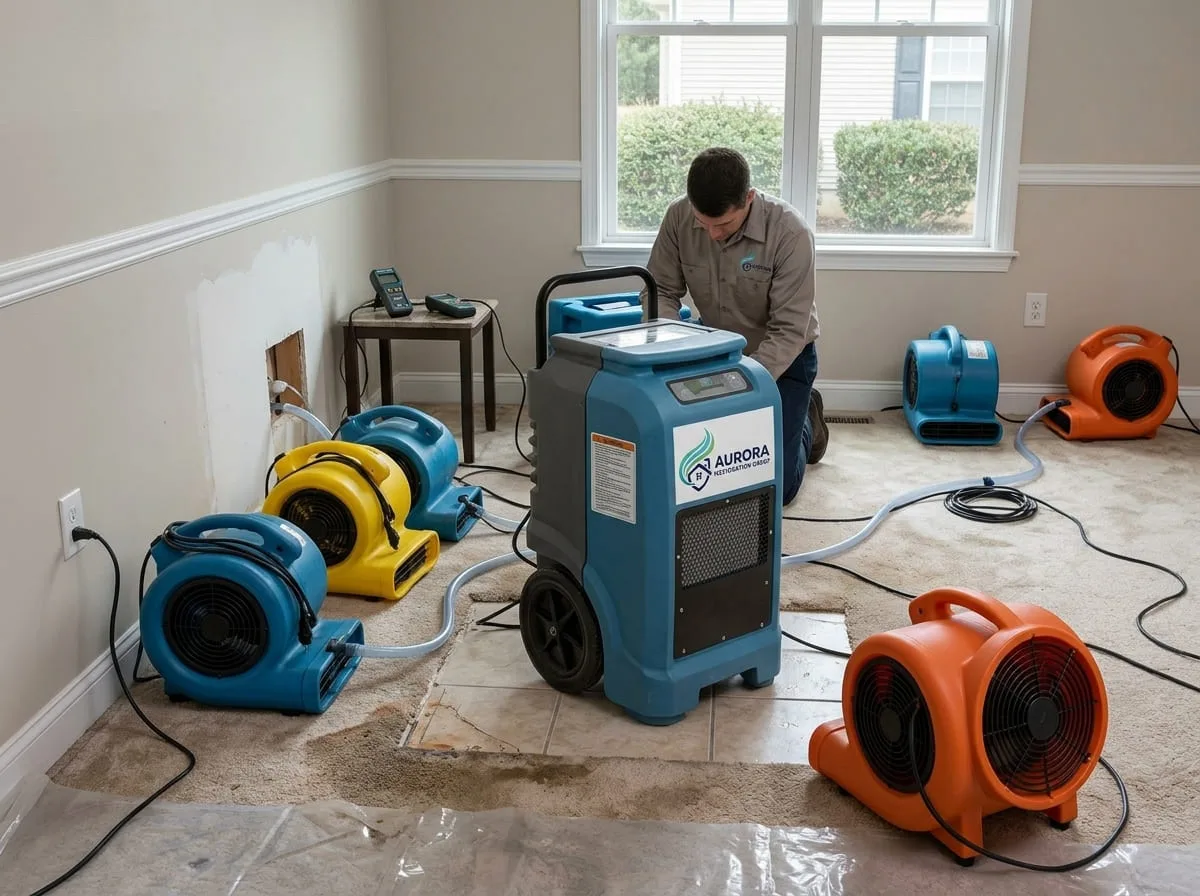
Drying a structure is really two processes happening at once. Air movers speed evaporation by pulling moisture out of wet materials into the surrounding air, while dehumidifiers pull that moisture out of the air so it doesn't just resettle on nearby surfaces. Running one without the other slows the whole job down.
Psychrometry: Measuring the Invisible
Technicians track temperature, relative humidity, and grain depression (a measure of how much moisture the air can still absorb) throughout the drying process. These readings tell them whether equipment is working, whether it needs to be repositioned, and when the space has actually reached a dry standard rather than just looking or feeling dry.
Factors That Extend or Shorten Drying Time
What Got Wet Matters More Than How Much
Dense, absorbent materials like solid wood flooring, drywall, and insulation hold moisture longer than materials such as tile, vinyl, or concrete. A room with wet carpet and pad but dry walls dries faster than one where water wicked two feet up drywall and into wall cavities.
How Long the Water Sat Before Extraction
Water extracted within the first few hours leaves far less moisture behind than water that sat for a day or more. This is one of the biggest reasons early water extraction matters as much as the drying equipment that follows it, as covered in our comparison of extraction versus full restoration.
Water Category and Contamination Level
Clean water from a supply line dries differently than gray or black water, which may require more aggressive material removal rather than in-place drying for health and structural reasons. Our breakdown of water damage categories explains how category affects the whole approach, not just drying speed.
Climate and Building Envelope
Aurora's semi-arid Front Range climate generally runs low humidity outdoors, which can help drying once a space is opened up and equipment is running. Enclosed spaces like basements, however, tend to hold moisture longer regardless of outdoor conditions, since they have less natural air exchange and are common throughout Aurora's housing stock across almost every era of construction.
Time of Year Plays a Role Too
A summer job in Aurora may benefit from naturally low outdoor humidity that helps ventilation-assisted drying, while a winter job following a frozen-pipe burst often happens in a closed-up house with the heat running, which changes how equipment is positioned and how much reliance is placed on dehumidification versus open-air ventilation.
Typical Stages of a Drying Job
Extraction and Assessment
Standing or pooled water is removed first with pumps or extraction equipment, and technicians use moisture meters and often thermal imaging to map exactly how far water traveled, including behind walls and under flooring where it isn't visible.
Equipment Placement and Monitoring
Air movers and dehumidifiers are positioned based on that moisture map, not just placed in the middle of the room. Equipment is generally left running and checked at intervals, with adjustments made as readings change, rather than run on a fixed schedule regardless of results.
Confirming a Dry Standard
A space isn't considered dry because it looks or feels dry. Technicians compare moisture readings in affected materials to a baseline reading from an unaffected area of the same material, and equipment stays in place until those readings are consistent.
How Equipment Selection Affects the Timeline
Low-Grain Refrigerant vs. Desiccant Dehumidifiers
Most residential jobs use refrigerant (low-grain) dehumidifiers, which work well in typical temperature ranges and are effective for standard structural drying. Desiccant dehumidifiers, which use a chemical drying agent rather than refrigeration, are sometimes brought in for colder spaces or situations needing very low humidity, such as a basement in winter.
Air Mover Placement Isn't Guesswork
Air movers are angled to create airflow across wet surfaces at roughly the right angle and distance, not just pointed into a room. Too few units, or units placed incorrectly, can leave pockets of trapped moisture even while the room overall seems to be drying on schedule.
Specialty Drying Equipment
Certain situations call for specialty equipment: injectidry systems to force air directly into wall cavities without removing drywall, or floor mat drying systems for hardwood that's been affected by water but hasn't yet delaminated. These tools can sometimes save materials that would otherwise need to be removed, though they don't work in every situation.
How Technicians Track Progress Day by Day
Daily or Regular Monitoring Visits
Rather than setting up equipment and returning only once drying is assumed complete, technicians typically check a job at intervals throughout the drying period, recording moisture readings each visit. This creates a documented drying curve showing whether materials are trending toward normal readings on a reasonable pace.
What a Stalled Reading Means
If moisture readings plateau instead of continuing to drop, it usually means either equipment needs repositioning, a hidden pocket of water hasn't been found yet, or the material in question has reached the point where drying in place isn't going to fully resolve it. Any of these outcomes changes the plan for that specific area, which is why monitoring rather than a fixed schedule is central to the process.
Why Rushing the Process Causes Problems Later
Pulling drying equipment early because a space feels dry is one of the more common ways trapped moisture turns into a bigger issue. Moisture left inside wall cavities, subfloor, or insulation can support microbial growth well after the surface appears dry, which is why mold following water damage often traces back to drying that was stopped too soon rather than to the original leak itself.
Residential vs. Commercial Drying Timelines
Scale Changes the Logistics, Not Just the Size
A commercial space often has a larger footprint, more complex HVAC systems, and sometimes multiple tenants or floors, which can extend the overall project timeline even if any single room dries at a similar rate to a residential one. Access scheduling and business operations also factor into how a commercial job is planned around drying needs.
Residential Jobs Still Vary Widely
Within residential properties alone, a single-room leak and a whole-basement flood are different projects, and both differ again from a scenario involving multiple floors, such as an upstairs bathroom leak that damaged a ceiling and floor below. Estimating drying time always starts with an on-site assessment of exactly what got wet, not a generic per-square-foot rule.
How Drying Time Relates to Your Insurance Timeline
Insurance adjusters generally expect to see documented moisture readings showing a clear drying trend, not just a completion date. This paperwork trail — the same one used to confirm a dry standard — also supports the claim by showing the mitigation work was necessary and completed appropriately, which matters if the timeline runs longer than a homeowner initially expected.
When Materials Can't Be Fully Dried
Not everything that gets wet can be saved. Materials that have been wet for an extended period, that have visible swelling or delamination, or that were exposed to contaminated water often need to be removed rather than dried in place. This is a normal and honest part of the process — see our guide on whether wet drywall can be saved for how that decision gets made on a material-by-material basis.
Setting Realistic Expectations From Day One
The most useful thing a homeowner can do is ask for moisture readings and a general sense of trend, rather than a fixed end date, when a drying job starts. A technician who can show readings dropping steadily over several visits is giving you a much more reliable signal than any single number quoted before equipment is even in place. If readings stall or a section isn't responding to drying, that's worth a direct conversation about whether removal is the more practical path forward rather than continuing to run equipment indefinitely.
Frequently Asked Questions
How many days does it take to dry a water-damaged room?+
It varies by job and is measured with moisture readings rather than a fixed calendar. Materials, how long water sat before extraction, humidity, and airflow all affect the timeline, so an accurate estimate comes from an on-site assessment rather than a general rule.
Can I speed up drying with household fans alone?+
Household fans move air but don't remove moisture from the air the way a dehumidifier does, so they can help a little with a very small, shallow spill but aren't a substitute for professional air movers and dehumidification on anything larger.
How do professionals know when something is actually dry?+
They compare moisture meter readings in the affected material to a dry baseline reading taken from an unaffected area of the same material, rather than relying on how the surface looks or feels.
Does Aurora's dry climate mean water damage dries faster here?+
Outdoor humidity is generally low along the Front Range, which can help once a space is opened up, but enclosed areas like basements still hold moisture regardless of outdoor conditions and typically need mechanical drying equipment.
What happens if drying equipment is removed too early?+
Materials that still hold trapped moisture can develop microbial growth or structural issues later, even if surfaces appear dry. That's why technicians confirm a dry standard with instruments before ending the drying phase.
Is drying time different for a basement than an upstairs room?+
Often yes. Basements typically have less natural airflow and more enclosed materials, which can extend drying time compared to a similar-size room on an upper floor with windows and ventilation.