
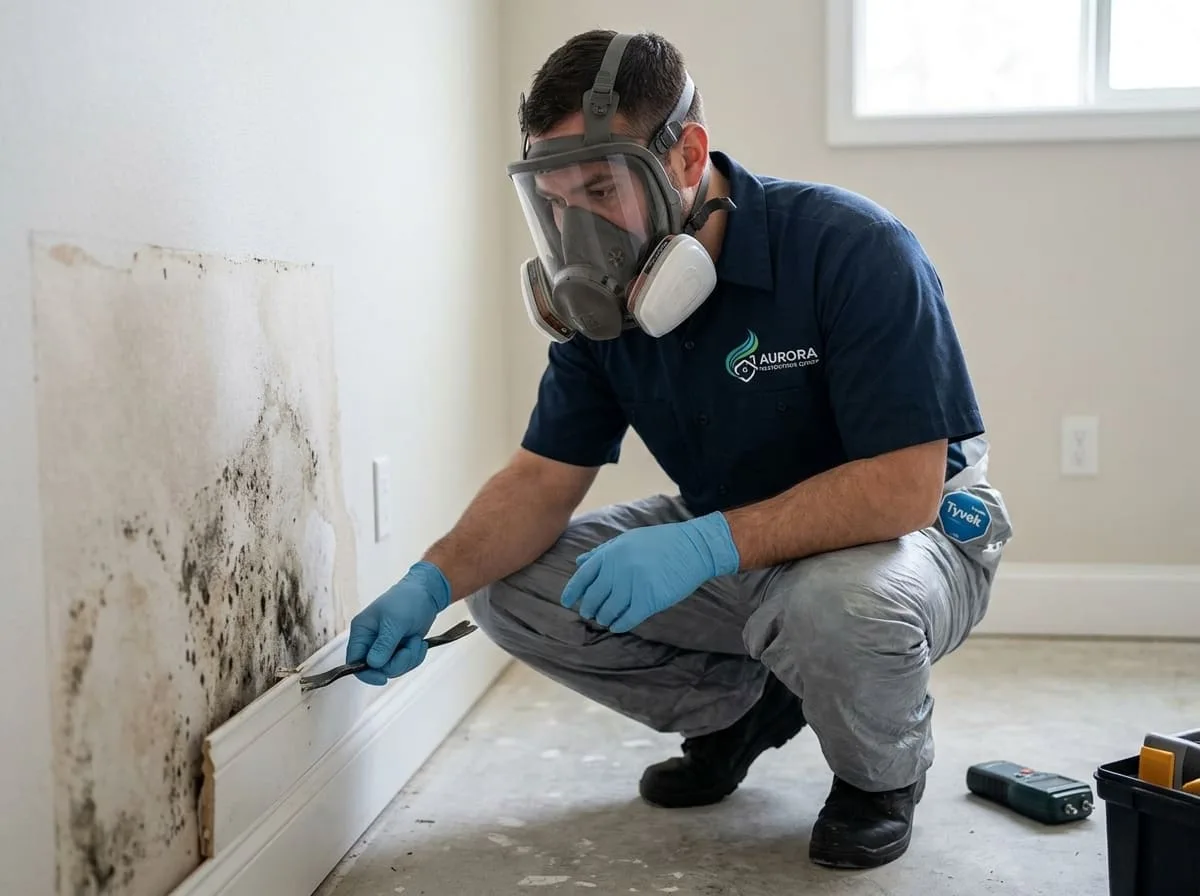
Why Water Damage and Mold Are Connected in Aurora
Aurora's semi-arid, high-plains climate keeps ambient indoor humidity relatively low most of the year, so mold rarely develops from air moisture alone the way it can in humid climates. Instead, the mold cases that show up in Aurora homes and businesses almost always trace back to a specific water event.
Climate Sets the Baseline, Water Events Change It
Wide day-to-night and seasonal temperature swings are typical of the Front Range, and that dry baseline generally works against mold. Once a leak, storm intrusion, or plumbing failure introduces sustained moisture into drywall, subfloor, or framing, the local climate no longer protects that specific area the way it protects the rest of the building.
The Window Between a Leak and a Mold Problem
Mold can begin colonizing wet organic materials within roughly one to two days under favorable temperature and moisture conditions. That narrow window is the main reason fast extraction and drying after any water event matters more than most homeowners expect, even in a dry climate like Aurora's.
Situations That Commonly Lead to Mold After a Water Event
Undiscovered Roof Leaks After Hail
Aurora sits inside "Hail Alley," and storms like the May 2017 and May 2024 Denver-metro hailstorms left compromised shingles, flashing, and skylights across the region. Roof damage often isn't obvious from the ground, so water can enter attic insulation and ceiling drywall for weeks before a stain finally appears.
Slow Plumbing Leaks in Walls and Under Fixtures
A slow supply line leak behind a wall or a worn supply hose under a sink can drip for a long time without anyone noticing, especially in a finished space where the wall cavity hides the moisture. By the time a stain or soft spot shows up, mold has often already started.
Appliance and Water Heater Failures
Washing machine hoses, dishwasher supply lines, and aging water heaters are common sources of sudden water damage in homes across every era of Aurora's housing stock, from mid-century Hoffman Heights tract homes to newer construction near E-470.
Signs Water Damage Has Progressed to Mold
Visual and Material Signs
Discoloration on drywall, baseboards, or ceiling tiles; warped or buckled flooring; and peeling paint near a known leak site are all signs worth having checked. Materials that were wet for more than a day or two are the most likely candidates.
Musty Odor and Air Quality Signs
A persistent musty smell, particularly one that's stronger in a specific room or corner, often points to hidden moisture even when nothing is visible. This is worth investigating rather than masking, since the underlying moisture source needs to be addressed either way.
What Happens Once Mold Is Suspected After Water Damage
Restoration professionals typically start by identifying and stopping the ongoing moisture source, then assess the extent of both the water damage and any mold growth. Depending on what they find, a mold inspection and, if needed, air or surface sampling can confirm the scope before remediation work begins.
From there, affected materials that can't be reliably cleaned are removed, remaining surfaces are treated, and the space is dried down with professional extraction and drying equipment. See the mold inspection page for more on how that assessment step works.
What to Do While Waiting for Help
Stop the Source if It's Safe
Shutting off a water supply valve, placing a bucket under a slow drip, or moving furniture away from a wet area can limit how far damage spreads before help arrives, as long as doing so doesn't put anyone at risk around electrical systems or standing water.
Avoid Disturbing Visible Growth
If mold is already visible, resist the urge to scrub, spray, or otherwise disturb it before an inspection. Disturbing dry mold growth can release spores into the air and spread the problem to areas that weren't previously affected.
Photograph the Damage
Photos of the affected area, the source of the water if it's identifiable, and any visible growth are useful both for the restoration professionals assessing the job and for any insurance claim that follows.
Residential and Commercial Water Events
A slow leak behind a kitchen wall in a single-family home and a rooftop unit leak in a commercial building both follow the same basic pattern — undetected moisture, then mold if drying is delayed — but the scale and response differ. See residential mold remediation and commercial mold remediation for how each is typically handled.
Reducing Risk After a Water Event
The single biggest factor in whether a water event turns into a mold problem is how quickly the affected materials are dried out. Prompt extraction, dehumidification, and monitoring — the core of a proper water damage restoration response — is what keeps a leak from becoming a bigger remediation job later.
For a closer look at the general timeline between a water event and mold risk, see the resource on how quickly mold can become a concern after water damage. If you're dealing with active mold growth rather than a fresh leak, the mold remediation overview covers the full range of services available.
Insurance Considerations After a Water Event
Documenting the Timeline
Because coverage for resulting mold often depends on how quickly a homeowner responded to the original water event, keeping a record of when the leak was discovered, when it was reported, and when drying began can matter later in the claims process.
Separate Claims for Water and Mold
Depending on the insurer, water damage and any resulting mold remediation may be handled as part of the same claim or documented separately. The receiving contractor can help outline what documentation supports each part of the process.
A Realistic Expectation on Materials
Not every material exposed to water and time can be saved. Porous materials that stayed wet too long, such as certain drywall or carpet padding, often need to be replaced rather than cleaned, while structural framing and many hard surfaces can usually be dried, cleaned, and retained.
Frequently Asked Questions
How soon after water damage can mold start growing?+
Under favorable temperature and moisture conditions, mold can begin colonizing wet materials within roughly one to two days. That's why prompt extraction and drying after any leak or flooding event matters, even in a dry climate like Aurora's.
Can water damage be dried out before mold becomes a problem?+
Yes, in many cases. If affected materials are extracted and dried quickly with professional equipment, mold growth can often be avoided entirely. The key factor is how much time passes between the water event and a proper drying response.
Do I need mold testing after every water damage event?+
Not necessarily. If the area was dried quickly and thoroughly, testing may not be needed. Testing becomes more relevant when drying was delayed, when there's a visible musty odor, or when someone wants documented confirmation before closing out the work.
Will homeowners insurance cover mold that results from a covered water damage claim?+
It depends on your specific policy and the circumstances. Mold connected to a sudden, covered event is generally viewed differently than mold from long-term neglect. The receiving contractor can help document the timeline for your insurer.
What's the first step if I suspect mold after a leak?+
Stop or contain the ongoing moisture source if it's safe to do so, avoid disturbing any visible growth, and have the area inspected. A mold inspection can determine the extent of the problem and whether sampling or remediation is the right next step.