Mold Risk in Aurora's Commercial Buildings
Commercial properties in Aurora face many of the same water-driven mold triggers as homes, but at a larger scale and often with more building systems involved. A leak or roof failure in an office, retail space, or multifamily building can affect a larger footprint before anyone notices.
Flat and Low-Slope Roofs After Hail
Many commercial buildings use flat or low-slope roofing, which is particularly vulnerable to the large hail events the Denver-Aurora corridor sees regularly, including the 2017 and 2024 storms. Ponding water and compromised membranes can lead to slow leaks into ceiling tiles and wall cavities that go unnoticed for weeks.
HVAC and Plumbing Systems in Multi-Tenant Buildings
Larger mechanical and plumbing systems mean more potential failure points — condensate lines, rooftop units, and shared plumbing risers can all introduce moisture into spaces that aren't checked as often as a single-family home.
Why Commercial Mold Situations Differ From Residential
Larger Scale, More Stakeholders
A commercial mold job may involve a property manager, one or more tenants, an insurance carrier, and sometimes a lender or lease agreement with specific maintenance obligations. Coordinating remediation work across those parties adds a layer of complexity residential jobs don't have.
Operational Downtime and Documentation
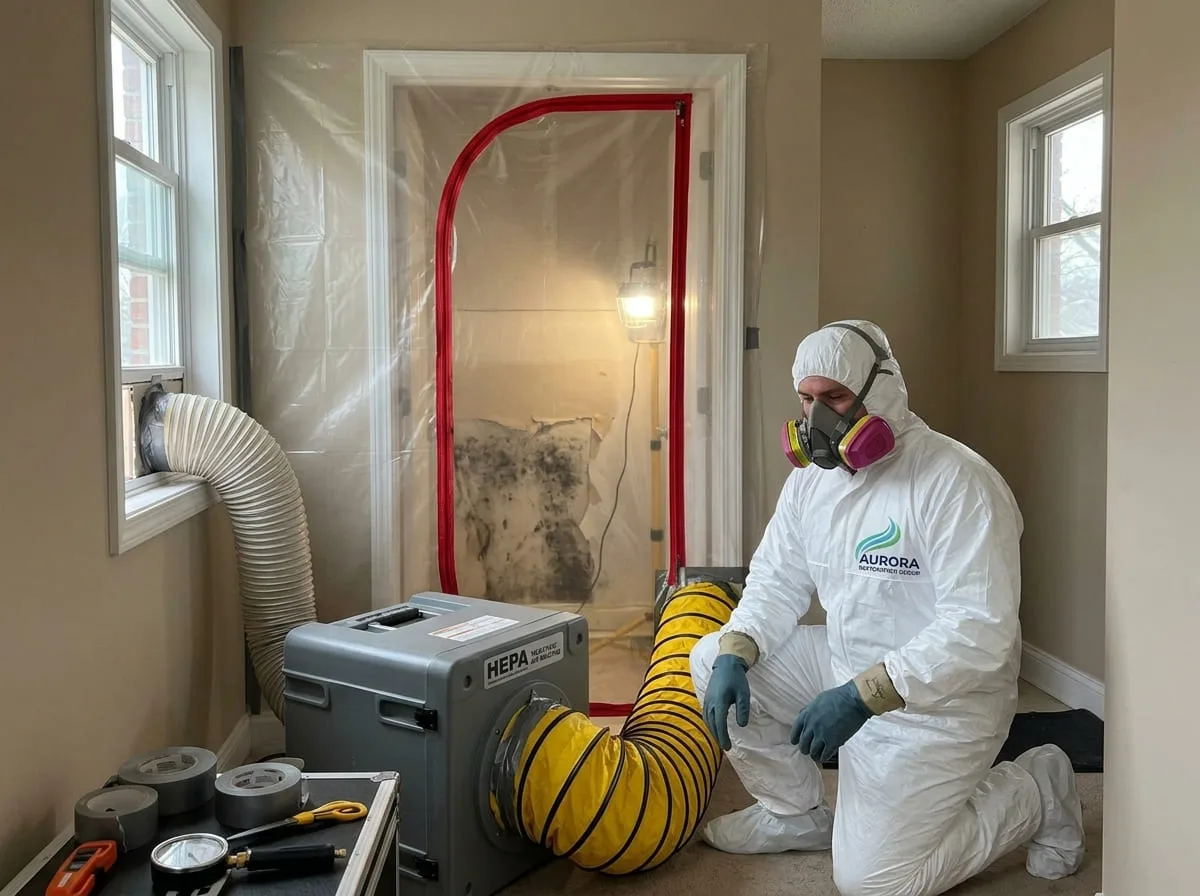
Businesses generally need to keep operating, or at least minimize closure time, during remediation. That often means phased containment — isolating and treating one section of a building while adjacent areas remain in use — along with thorough documentation to support insurance claims and lease-related communication.
Types of Aurora Commercial Properties Commonly Affected
Office buildings, retail centers, multifamily and apartment properties, and warehouse or light-industrial space all generate commercial mold calls in the Aurora area. Multifamily buildings in particular combine shared roofing and plumbing systems with individual living units, which can complicate both detection and remediation.
The Commercial Remediation Process
The process starts with an inspection to map the affected area and identify the moisture source, followed by containment appropriate to the building's layout and occupancy needs. Affected materials are removed or treated, the space is dried with commercial-grade equipment, and post-remediation verification confirms the work is complete.
See the mold inspection and post-remediation verification and clearance testing pages for more detail on those steps, which apply to commercial properties as well as residential ones.
Working With Property Managers and Insurers
Insurance claim assistance is available through the receiving contractor for commercial as well as residential jobs, including documentation of the affected area, the work performed, and clearance results. This kind of paper trail matters more in commercial settings, where lease terms, tenant communication, and carrier requirements often intersect.
For the water damage side of a commercial loss, the water damage restoration overview covers extraction and drying services that apply across residential and commercial properties alike.
Reducing Downtime During Commercial Remediation
Scheduling Around Business Hours
Where possible, containment setup, demolition, and other disruptive work can sometimes be scheduled during off-hours to reduce the impact on customers, tenants, or staff during the business day.
Sealing Off Affected Zones
Physical barriers and negative-air containment keep the remediation zone isolated from adjacent occupied spaces, which is often what allows a business to keep operating in unaffected areas while work continues nearby.
Communicating With Tenants and Staff
Clear, timely communication about what's happening, which areas are affected, and how long work is expected to take helps reduce disruption and answer questions before they become concerns.
Preventive Maintenance for Commercial Properties
Regular roof inspections after hail season, prompt attention to HVAC condensate issues, and routine checks of plumbing risers in older buildings all reduce the odds of a moisture problem going unnoticed long enough to develop into mold. This matters particularly for Aurora's older commercial stock along established corridors, where building systems have had more years to develop wear.
For properties that have already experienced a loss, the mold testing and sampling page explains how lab-based results factor into both the initial scope of work and the sign-off once remediation is finished.
Compliance and Recordkeeping
Lease and Building Code Obligations
Commercial leases and local building codes may include specific maintenance and habitability requirements that intersect with a mold situation. Reviewing lease language early helps clarify who is responsible for what before disputes arise.
Keeping a Maintenance Record
A documented history of roof inspections, HVAC servicing, and any prior water events gives a property owner useful context if a mold issue does arise, both for insurance purposes and for demonstrating reasonable maintenance practices.
Multi-Tenant and Multifamily Considerations
In buildings with multiple units or tenants, a moisture problem in one unit can sometimes affect a shared wall or the unit below or beside it. Coordinating access and communication across affected tenants adds a layer of scheduling complexity that single-tenant buildings don't face, and is worth planning for early in the process.
Getting Started
Most commercial mold jobs begin with a property manager or owner reporting a leak, a musty odor in a specific tenant space, or visible staining after a storm. From there, an inspection scopes the problem before any remediation work is scheduled.
Every call is routed to experienced restoration crews serving Aurora businesses, and the professionals dispatched are equipped to handle the coordination that larger commercial properties require, from initial assessment through final documentation.
Seasonal Timing in the Denver-Aurora Market
Commercial mold calls tend to cluster after the region's severe hail seasons, roughly April through September, when compromised roofing membranes let moisture into ceiling and wall cavities. Winter cold snaps following a chinook-driven warm spell add a second, smaller spike tied to burst pipes in mechanical rooms and exterior-wall plumbing.
Frequently Asked Questions
Can a commercial building stay open during mold remediation?+
Often, at least partially. Phased containment can isolate the affected area while the rest of the building continues operating, though the extent of any closure depends on where the mold is located and how extensive the work is.
How is commercial mold remediation different from residential?+
The core remediation steps are similar, but commercial jobs typically involve larger buildings, shared systems like HVAC and plumbing, multiple stakeholders, and more formal documentation for insurance and lease purposes.
Who typically pays for commercial mold remediation, tenant or property owner?+
That depends on the lease agreement and the cause of the moisture. Commercial leases often assign maintenance and repair responsibilities differently than residential leases, so this is worth reviewing early in the process.
Does commercial mold remediation include documentation for insurance claims?+
Yes, insurance claim assistance is available through the receiving contractor, including documentation of the affected area, work performed, and any post-remediation testing results.
What commercial property types see the most mold-related calls in Aurora?+
Office buildings, retail centers, multifamily properties, and warehouse or light-industrial space all generate calls, often connected to flat-roof leaks after hail or shared plumbing and HVAC issues.