What Counts as a Fire Damage Emergency
Not every fire calls for the same urgency, but any fire that damaged a living space, left standing water from suppression efforts, or left the building open to weather qualifies as an emergency. Waiting even a day or two lets smoke odor set deeper and gives moisture a chance to cause secondary damage.
Signs You Need Immediate Help
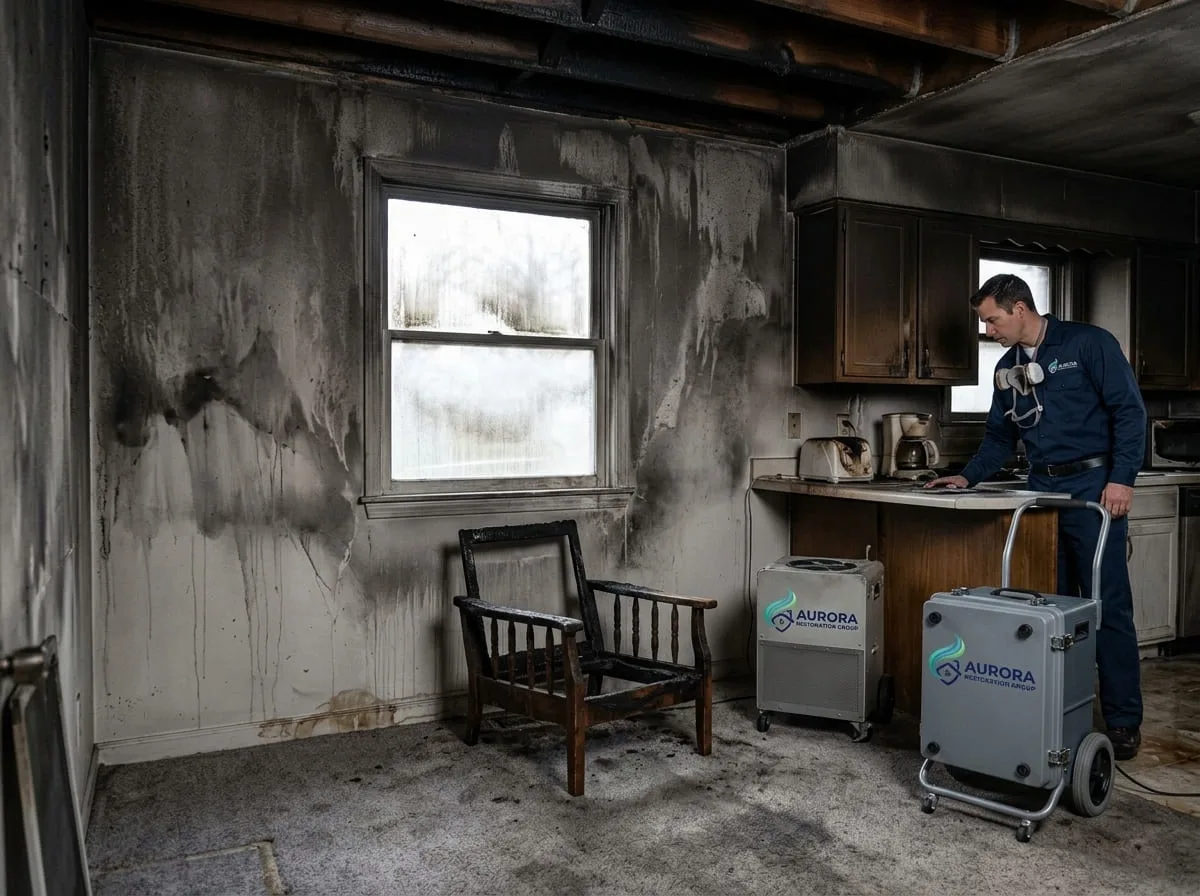
Visible char, a strong smoke smell throughout the home rather than just near the fire's origin, broken windows, or firefighting water pooling on floors are all signs that professional mitigation should start the same day.
What Happens in the First 24 Hours
Scene Assessment and Safety Check
Technicians assess structural safety, electrical hazards, and air quality before starting work. This determines which areas are safe to enter and which need a contractor or engineer to weigh in first.
Securing the Property
Broken windows, damaged doors, and compromised roofing get covered through emergency board-up and tarping, protecting the interior from rain, wind, and unauthorized entry while repairs are planned.
Water Extraction
Most fires involve substantial water from hose lines or sprinklers. That water gets extracted and the structure dried using the same equipment and monitoring used in firefighting water damage cleanup, since letting it sit invites mold and warping.
Why Fast Response Matters in Aurora Specifically
Aurora's dry, high-plains climate means indoor humidity is usually low, which can help soot and fine ash particles stay airborne and drift into rooms that never saw flames. That same dryness can make smoke odor bond to surfaces faster than in a humid climate, which is one reason a quick professional response tends to produce a better long-term outcome than a delayed one.
Seasonal Timing Factors
Winter fires tied to space heaters, fireplaces, and wood stoves are common during the Front Range's sharp cold snaps. If a fire happens during a hard freeze, exterior water from suppression efforts can turn to ice, adding another layer to the emergency response.
What an Emergency Response Typically Includes
- Structural and safety assessment of the property
- Board-up and tarping to stop further weather intrusion
- Extraction of firefighting water and initial drying setup
- Air scrubbing and initial odor control
- Documentation to support the insurance claim
What to Do Before Help Arrives
Reasonable Steps to Take
Keep a safe distance from any area the fire department hasn't cleared, photograph visible damage if it's safe to do so, and follow any utility shut-off instructions from fire personnel.
What to Avoid
Avoid using electrical outlets or appliances in affected rooms until they've been checked, and resist wiping soot with household cleaners or a wet cloth, since that tends to push it deeper into fabric and grout instead of lifting it away.
Residential and Commercial Emergencies
Home fires and business fires both need the same fast initial response, though commercial properties often add access restrictions, larger footprints, and equipment or inventory considerations. Commercial fire damage restoration covers those differences in more detail.
Emergency Response Across Aurora's Housing Stock
Emergency fire response covers Aurora's full range of housing, from older homes in neighborhoods like Hoffman Heights to newer construction further east. Older homes sometimes need extra care around legacy wiring and plaster walls during the initial safety check, while newer homes are more likely to have HVAC systems that can spread smoke odor through ductwork if not addressed quickly.
Common Causes of Structure Fires
Cooking equipment, electrical faults, and heating equipment are consistently among the most common sources of residential fires. Space heaters, fireplaces, and wood stoves see heavier use during the Front Range's sharp cold snaps, which is one reason winter months often bring a different mix of fire causes than the rest of the year.
Coordinating With the Fire Department and Insurance
Restoration crews typically wait for the fire department to release the scene before starting work, and coordinate directly with whoever is documenting the loss for insurance purposes. Getting an assessment started the same day the scene is released helps establish a clear record of conditions before drying or cleanup begins.
Emergency Response for Renters and Landlords
A rental property fire adds coordination between tenants, property managers, and sometimes multiple insurance policies. Emergency response still follows the same core steps, securing the structure, extracting water, and beginning air quality control, regardless of who holds the policy.
After the Emergency Response
Once the property is stabilized, attention shifts to cleaning soot and treating odor, and eventually to repairs. Salvageable belongings are typically handled away from the active job site so cleaning can proceed independently of repair work.
Setting Realistic Expectations
Emergency mitigation stops damage from getting worse; it doesn't undo what's already happened. A property owner should expect a follow-up assessment and a scope of work for repairs once the emergency phase is complete, rather than a same-day full resolution.
Pets and Temporary Displacement
A fire that makes part of a home unsafe often means residents, and any pets, need somewhere else to stay while emergency work happens. Confirming which areas are safe to occupy, if any, is typically part of the initial safety assessment rather than something worked out later.
For a broader look at how the full recovery process fits together, the fire damage restoration overview covers each stage from first call to final repair.
Frequently Asked Questions
How fast can emergency fire damage response start in Aurora?+
Emergency response is coordinated around the clock, and dispatch typically begins as soon as the fire department has cleared the scene and the call comes in.
Do I need emergency service for a small, contained fire?+
Even a small fire can produce smoke and soot that spread through the HVAC system and into other rooms, so an assessment is worth getting even when visible damage looks limited.
Is it safe to re-enter my home after a fire before restoration starts?+
Only enter areas the fire department has confirmed are safe, and avoid using electrical systems or appliances in affected rooms until they've been checked by a professional.
What's the first thing that happens when emergency crews arrive?+
A structural and safety assessment comes first, followed by securing the property against weather and further access, then extraction of any firefighting water.
Does emergency response include contents and belongings?+
Initial emergency response focuses on stabilizing the structure; contents cleaning and pack-out is typically arranged as a follow-on step once the property is secured.