Why Drying Is Its Own Phase of the Job
Once standing water is extracted, materials like drywall, subfloor, framing, and insulation can still hold significant moisture that isn't visible from the surface. Structural drying uses air movement and dehumidification to pull that trapped moisture out over a period of days, rather than assuming a room is dry once it looks dry.
Skipping or shortening this phase is one of the more common reasons water damage turns into a mold or structural problem later, since materials that look fine on the surface can still be wet enough underneath to support mold growth.
Colorado's Climate and What It Means for Drying
Low Ambient Humidity Can Be Misleading
Aurora's semi-arid, high-plains climate means outdoor humidity is generally low, which can make a water-damaged space feel dry to the touch faster than it actually is at the material level. Surface dryness isn't the same as the material reaching a true dry standard.
Why Moisture Meters Matter More Than a Guess
Because visual and tactile checks aren't reliable on their own, technicians use moisture meters to measure actual moisture content inside drywall, wood framing, and subfloor, comparing it against unaffected reference material in the same building.
Equipment Used in Structural Drying
Air Movers
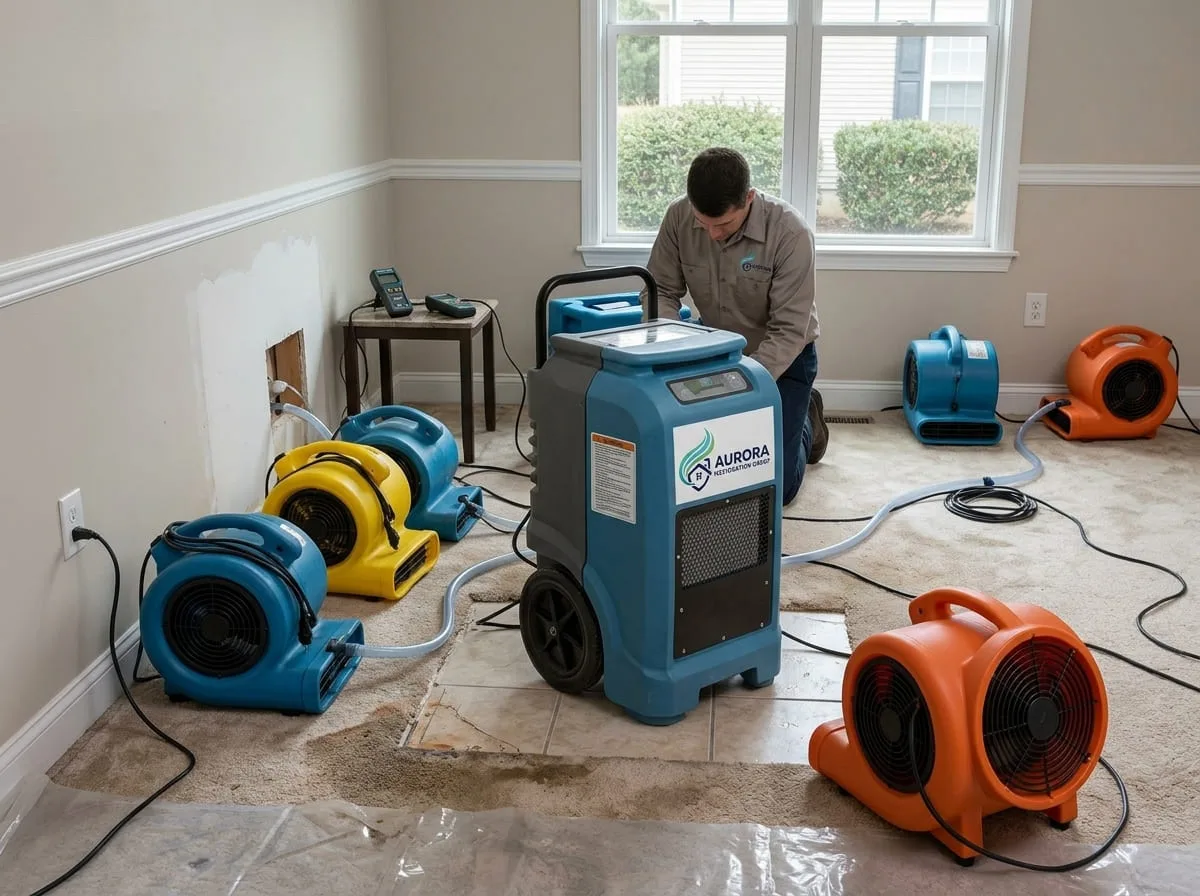
High-velocity air movers are positioned to create airflow across wet surfaces, which speeds evaporation significantly compared to still air.
Dehumidifiers
As air movers evaporate moisture into the air, dehumidifiers pull that moisture back out, preventing it from simply redistributing into unaffected areas of the property.
Specialty Drying Equipment
Injection systems for wall cavities, floor mat drying systems for hardwood, and other specialty tools are used for situations where standard air movers can't reach the trapped moisture directly.
How Long Drying Takes
Drying time depends on how much water intruded, which materials absorbed it, ambient humidity, and how quickly extraction and airflow started. Rather than promise a fixed number of days, technicians track daily moisture readings and continue drying until levels return to a normal, dry-standard range. See how long does water damage take to dry for more detail on the variables involved.
Finding Moisture You Can't See
Water frequently travels behind walls, under flooring, or into cavities well beyond the visible wet area. Thermal imaging and moisture meters help technicians map the actual extent of the problem rather than treating only what's obvious. See how professionals find hidden moisture behind walls for how this works.
When Drying in Place Isn't Enough
Not every material can be dried and saved. Materials that were exposed to contaminated water, or that have been wet long enough to show swelling, delamination, or early mold growth, generally need to be removed rather than dried, and it's worth being upfront about that rather than promising every surface can be salvaged. Related pages include hardwood and flooring water damage and mold prevention and moisture control.
Drying Different Material Types
Drywall and Insulation
Drywall dries relatively predictably once air movement and dehumidification are in place, but insulation behind it, especially fiberglass batt insulation, can hold moisture longer and sometimes needs to be removed rather than dried, since saturated insulation loses much of its thermal value anyway.
Wood Framing and Subfloor
Framing lumber and subfloor panels dry more slowly than drywall because of their density, and they're checked with moisture meters throughout the process since surface dryness doesn't reflect moisture deeper in the wood.
Concrete and Masonry
Concrete, common in basement floors and foundation walls throughout the area, can hold moisture for an extended period and releases it slowly even under active drying equipment, which is part of why basement drying often takes longer than above-grade rooms.
Documentation During the Drying Process
Daily or periodic moisture readings are typically logged throughout the drying process, creating a record that supports the insurance claim and confirms materials reached a normal dry standard before equipment was removed. Insurance claim assistance is available through the receiving restoration contractor to help make use of this documentation.
Avoiding Secondary Damage During Drying
Running drying equipment in a space that's too enclosed, or failing to monitor humidity in adjacent rooms, can sometimes push moisture into areas that weren't originally affected. Proper containment and airflow planning during the drying phase helps keep the job limited to the areas that actually need it.
Drying Basements and Crawl Spaces
Below-grade spaces naturally run more humid and have less airflow than rooms above ground, so drying a basement or crawl space often takes longer than an above-grade room affected by a similar amount of water. See basement water damage cleanup and crawl space water damage for how those spaces are handled specifically.
Confirming the Job Is Actually Finished
Rather than relying on a set number of days, the drying phase concludes only once moisture meter readings in the affected materials match unaffected reference points elsewhere in the building. That final check is what actually determines when equipment comes out, not a fixed calendar estimate given at the start of the job.
Drying Alongside an Active Repair Schedule
On jobs where drywall, insulation, or flooring were removed rather than dried, structural drying of the remaining framing and subfloor typically happens before that new material goes in, since installing replacement surfaces over damp framing can trap moisture behind them.
What a Property Owner Can Expect Between Visits
Air movers and dehumidifiers generally run continuously between technician visits, and a property owner isn't expected to operate or adjust the equipment themselves. Technicians return periodically to check moisture readings, reposition equipment as needed, and determine whether drying is progressing as expected.
Frequently Asked Questions
How do you know when a wall or floor is fully dry?+
Moisture meters measure actual moisture content in the material and compare it against a dry, unaffected reference point in the same building. Drying continues until readings return to that normal range, rather than being judged by touch or appearance alone.
Does Colorado's dry climate mean drying goes faster here?+
Low ambient humidity can help evaporation at the surface, but it can also make a space feel dry before materials underneath actually are. That's part of why moisture meters, not just how a room feels, guide when drying is complete.
Can I turn off the air movers and dehumidifiers early to save on noise or energy use?+
It's not recommended. Stopping the equipment before materials reach a dry standard can allow trapped moisture to remain in walls or subfloor, which raises the risk of mold or long-term structural issues.
Will every wet material be saved during drying?+
Not necessarily. Materials exposed to contaminated water, or wet long enough to swell, delaminate, or show early mold growth, generally need to be removed rather than dried in place. An honest assessment upfront avoids drying something that won't actually recover.
How many days does structural drying typically take?+
It varies by how much water intruded and which materials were affected. Rather than a fixed timeline, technicians track moisture daily and continue equipment placement until the structure reaches normal, dry-standard levels.