
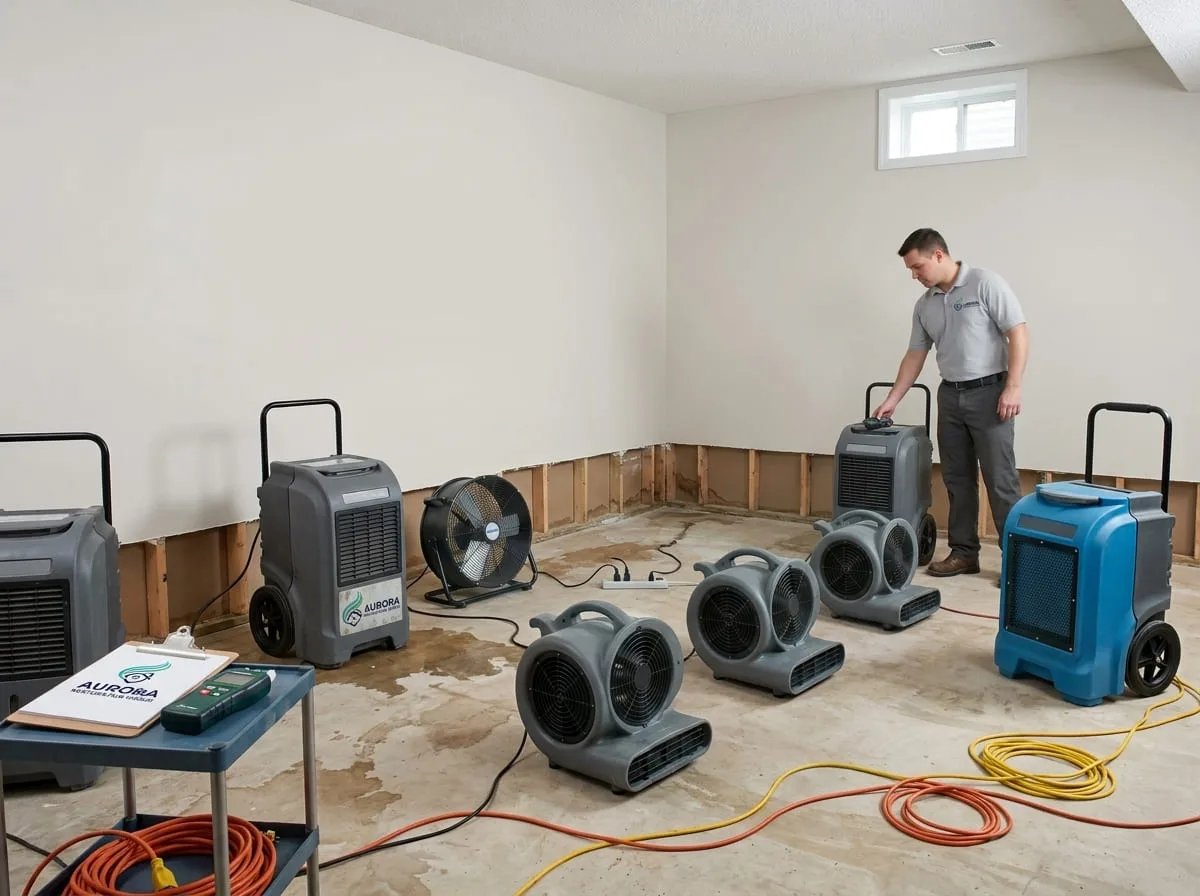
Why Basements Are a Common Water Damage Site in Aurora
Basements, including unfinished basements used for mechanical and storage space, are a common feature of Colorado home construction across most eras and price points. That's a meaningful factor in local water damage patterns compared to regions where basements are rare, since below-grade space sits at the point where multiple water sources can converge, plumbing, groundwater, and surface drainage alike.
Common Causes of Basement Water Damage
Sump Pump Failure
A sump pump that fails during a storm, whether from a power outage, mechanical failure, or simply being overwhelmed by volume, is one of the more common causes of a sudden basement flood, especially during Aurora's intense summer thunderstorms.
Foundation Seepage and Window Wells
Heavy rain, particularly the kind of flash flooding Aurora sees when storms exceed local drainage capacity, can force water through foundation cracks or overwhelm window wells that weren't built to handle that volume.
Frozen or Burst Pipes in Unheated Areas
Unfinished basements often contain exposed, sometimes uninsulated supply and drain lines, which are vulnerable during Colorado's chinook-driven freeze-thaw cycles. See burst pipe water damage for more on this pattern.
Sewer Backups
Because basements sit at the lowest point in a home's plumbing system, they're the most common place for a sewer backup to surface. See sewage cleanup for how that specific situation is handled.
The Basement Cleanup Process
Extraction
Standing water is extracted using pumps and vacuum equipment suited to the volume involved, which can range from a few inches to a foot or more depending on the cause.
Assessing Stored Belongings and Materials
Basements often store items not kept elsewhere in the home, and part of the initial assessment includes identifying what can be dried and salvaged versus what was too contaminated or saturated to save.
Drying the Space
Because basements naturally run more humid with less airflow, dehumidification often takes longer here than in above-grade rooms, and moisture monitoring continues until the concrete, framing, and any finished surfaces reach normal levels.
Immediate Steps Before Crews Arrive
If it's safe to do so, avoid entering standing water near an electrical panel or outlets, and move any easily-accessible valuables to a dry area. For a fuller list of first steps and mistakes to avoid, see flooded basement immediate steps and common mistakes.
Related Situations
If the basement flooding was tied to a broader storm event, see flood damage cleanup. If the basement connects to an unfinished crawl space area, review crawl space water damage as well, since both spaces raise similar humidity and mold-prevention considerations covered on the mold prevention and moisture control page.
Finished vs. Unfinished Basements
An unfinished basement, common throughout Aurora and the wider Denver metro area, generally allows for faster, less invasive drying since there's less finished material, drywall, flooring, trim, to remove or work around. A finished basement often takes longer to assess and dry properly, since water can travel behind finished walls and under flooring out of immediate view.
Preventing Future Basement Flooding
Sump Pump Backup Power
A battery or water-powered backup for a sump pump can keep it running during a power outage, which is often when it's needed most during a storm.
Grading and Downspout Extensions
Making sure the ground slopes away from the foundation and that downspouts discharge water well away from the house are simple, low-cost steps that reduce how much water pressure builds up against basement walls during heavy rain.
Window Well Covers
Covers over basement window wells help keep out rain and debris that would otherwise collect and eventually work its way past the window seal.
Working With Insurance on a Basement Claim
Basement claims often raise more questions than an above-ground event, since coverage can depend heavily on whether water entered from a sudden mechanical failure, a sewer backup, or groundwater seepage. Insurance claim assistance through the receiving restoration contractor can help document which of these applies to a specific situation.
Basement Water Damage and Mold Risk
Because basements naturally run more humid with less airflow, a flooded basement carries a higher chance of lingering moisture than an above-grade room affected by a similar volume of water. See mold prevention and moisture control for how that ongoing risk is managed after the initial cleanup.
When a Basement Connects to a Crawl Space
Some Aurora homes have a partial basement adjoining an unexcavated crawl space area, and water damage in one section can affect humidity in the other even without a direct leak between them. See crawl space water damage for that connected scenario.
Sump Pumps: The First Line of Defense
A functioning sump pump is often the difference between a minor, contained water event and a significant basement flood during a heavy storm. Periodic testing, particularly heading into Aurora's late-spring and summer storm season, is a reasonable habit for any home with a sump system in place.
Basement Cleanup Timelines
A contained, quickly discovered event can often be extracted and set up for drying within the same visit, while a larger flood involving significant standing water and contents assessment takes longer just to reach the point where drying equipment is fully in place. Either way, moisture readings, not a preset schedule, determine when the space is actually finished drying.
Frequently Asked Questions
Why do Aurora basements flood even without a nearby creek or river?+
Most basement flooding in the area comes from localized causes like sump pump failure, foundation seepage during heavy rain, frozen pipes, or sewer backups, rather than a river or creek overflowing, since basements sit at the low point of the home's own drainage and plumbing systems.
Can a sump pump failure be prevented?+
A battery backup system can help during power outages, and periodic testing helps catch mechanical failures before a storm puts real demand on the system, though no measure eliminates the risk of failure entirely.
How long does it take to dry a flooded basement?+
It depends on how much water was involved, the basement's ventilation, and ambient humidity, which tends to be higher below grade than in above-ground rooms. Rather than a fixed timeline, moisture is tracked until the space reaches normal, dry levels.
Can finished basement materials, like carpet or drywall, be saved after a flood?+
It depends on the water's contamination level and how long it sat before extraction. Clean-water events addressed quickly allow more materials to be saved, while contaminated water or prolonged exposure usually means porous materials need replacement.
Does homeowners insurance cover a flooded basement in Aurora?+
It depends on the cause. A sudden mechanical failure like a burst pipe is typically covered, while damage from groundwater seepage or general flooding may require specific endorsements or a separate flood policy. Insurance claim assistance is available through the receiving restoration contractor.