The Relationship Between Water Damage and Mold Risk
Mold needs moisture, an organic food source, such as drywall paper or wood, and time to establish itself. Water damage supplies the first two, which is why the speed and completeness of extraction and drying directly affect whether mold becomes a secondary problem.
This isn't a reason for alarm on every water event, but it is a reason to treat drying as a monitored process with actual moisture readings rather than something to eyeball and assume is finished.
Aurora's Climate and Moisture Control
Semi-Arid Conditions Help, But Don't Guarantee Anything
Aurora's semi-arid, high-plains climate generally means lower ambient humidity than more humid parts of the country, which can be an advantage for drying. That said, water trapped inside a wall cavity or under flooring doesn't necessarily benefit from dry outdoor air unless it's actually being pulled out with proper equipment.
Basements and Crawl Spaces Need Extra Attention
Unfinished basements are common throughout Colorado homes, and below-grade spaces naturally run more humid and have less airflow than living spaces above, which makes them a higher-risk area for lingering moisture after any water event.
What Moisture Control Actually Involves
Monitoring During Active Drying
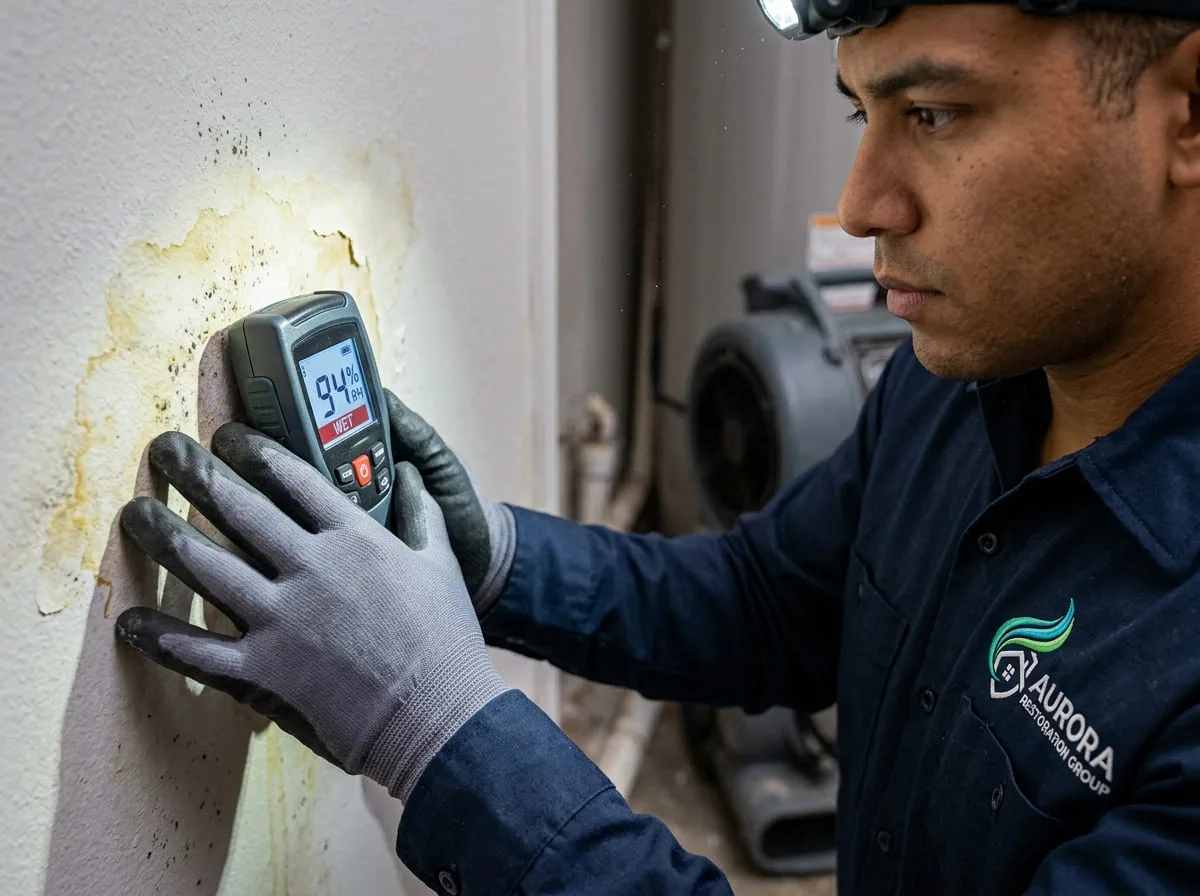
Moisture meters track drying progress in real materials rather than relying on how a space looks or feels, and drying equipment stays in place until those readings confirm the structure has returned to normal levels.
Addressing Humidity After Drying Is Complete
In spaces prone to elevated humidity, such as basements, a dehumidifier or improved ventilation can help maintain conditions that discourage mold growth going forward, beyond just the initial drying phase.
Inspecting for Existing Mold Before Assuming Drying Alone Is Enough
If water damage sat unaddressed for an extended period before drying began, an inspection can determine whether mold has already started, in which case moisture control alone isn't sufficient and remediation is needed.
When to Involve Mold Remediation
If visible mold growth, a persistent musty odor, or a known history of prolonged moisture is present, that goes beyond prevention and calls for inspection and remediation. See mold after water damage from the broader mold remediation services for that process, including testing and post-remediation verification.
Areas Worth Extra Attention
Basements, crawl spaces, and areas behind cabinetry or built-ins are common spots where moisture lingers unnoticed. See basement water damage cleanup and crawl space water damage for situation-specific guidance, and structural drying and dehumidification for how the drying phase itself is monitored.
General Humidity Guidance Homeowners Can Use
Keeping indoor humidity at a moderate, comfortable level, rather than letting a space stay damp or poorly ventilated, is a reasonable general habit after a water event has been resolved, particularly in basements and other below-grade spaces. A hygrometer is an inexpensive way to keep an eye on relative humidity in a previously affected room over time.
Ventilation Improvements That Support Moisture Control
Improving airflow in areas prone to dampness, such as running a bathroom exhaust fan longer after showers or adding ventilation to a crawl space, can help reduce the conditions that allow moisture to linger after the immediate drying work is done.
Long-Term Monitoring After a Water Event
Even after drying equipment is removed and readings confirm normal moisture levels, it's reasonable to keep an eye on previously affected areas for a musty smell, discoloration, or humidity changes over the following weeks, particularly in basements and other below-grade spaces where conditions naturally run more humid.
Post-Remediation Verification
When mold remediation has been performed, post-remediation verification confirms the work met the intended outcome before the area is considered clear. This step is part of the broader mold remediation process rather than the moisture-control work covered here.
Moisture Control in Newer vs. Older Aurora Homes
Newer construction near Painted Prairie and the Aurora Highlands is built to current energy and moisture codes, which generally supports better humidity management than older housing stock. That doesn't eliminate moisture risk after a water event in a newer home, but it does mean the starting conditions, insulation, vapor barriers, and ventilation, are generally more consistent than in an older property.
A Realistic View of Mold Prevention
Moisture control reduces risk; it doesn't guarantee mold will never occur, and it's not a substitute for prompt extraction and drying after an actual water event. Being direct about that distinction is more useful than offering blanket reassurance that isn't grounded in how mold actually develops.
Moisture Control in Commercial Spaces
Commercial buildings, particularly those with flat roofing, shared HVAC systems, or infrequently visited storage areas, can develop hidden moisture problems over a longer stretch than a home where someone notices a musty smell in daily use. Periodic inspection of mechanical rooms and roof drainage helps catch these before they become significant.
Simple Habits That Support Moisture Control
Running exhaust fans during and after showers, avoiding excessive indoor plant watering near flooring, and addressing small leaks promptly rather than letting them sit are all everyday habits that reduce the chances of moisture accumulating unnoticed between larger events.
Moisture Control as an Ongoing Practice
Rather than a single task completed once after a water event, moisture control works best as an ongoing habit, particularly in basements and other spaces prone to elevated humidity throughout the year, not just immediately following a known leak or flood.
Frequently Asked Questions
How soon after water damage can mold start growing?+
Mold generally needs sustained moisture and time to establish, and risk increases the longer materials stay wet. Rather than citing a fixed number of hours, the practical takeaway is that faster extraction and drying meaningfully reduce the risk.
Does Aurora's dry climate mean mold is less of a concern here?+
Lower ambient humidity can help overall, but it doesn't protect materials that are directly wet, such as inside a wall cavity or under flooring after a leak. Those areas still need proper extraction and drying regardless of outdoor humidity.
Can moisture control alone prevent mold if drying starts late?+
Not necessarily. If water damage sat long enough before drying began, mold may have already started, in which case an inspection is needed to determine whether remediation, not just moisture control, is required.
Are basements more prone to mold after water damage?+
Yes, generally. Below-grade spaces tend to run more humid with less natural airflow than living areas above, so moisture can linger longer there after a water event unless it's specifically addressed.
What's the difference between moisture control and mold remediation?+
Moisture control is a preventive step taken during and after drying to keep conditions from favoring mold growth. Mold remediation is a separate process for addressing mold that has already established, including inspection, containment, and removal.