
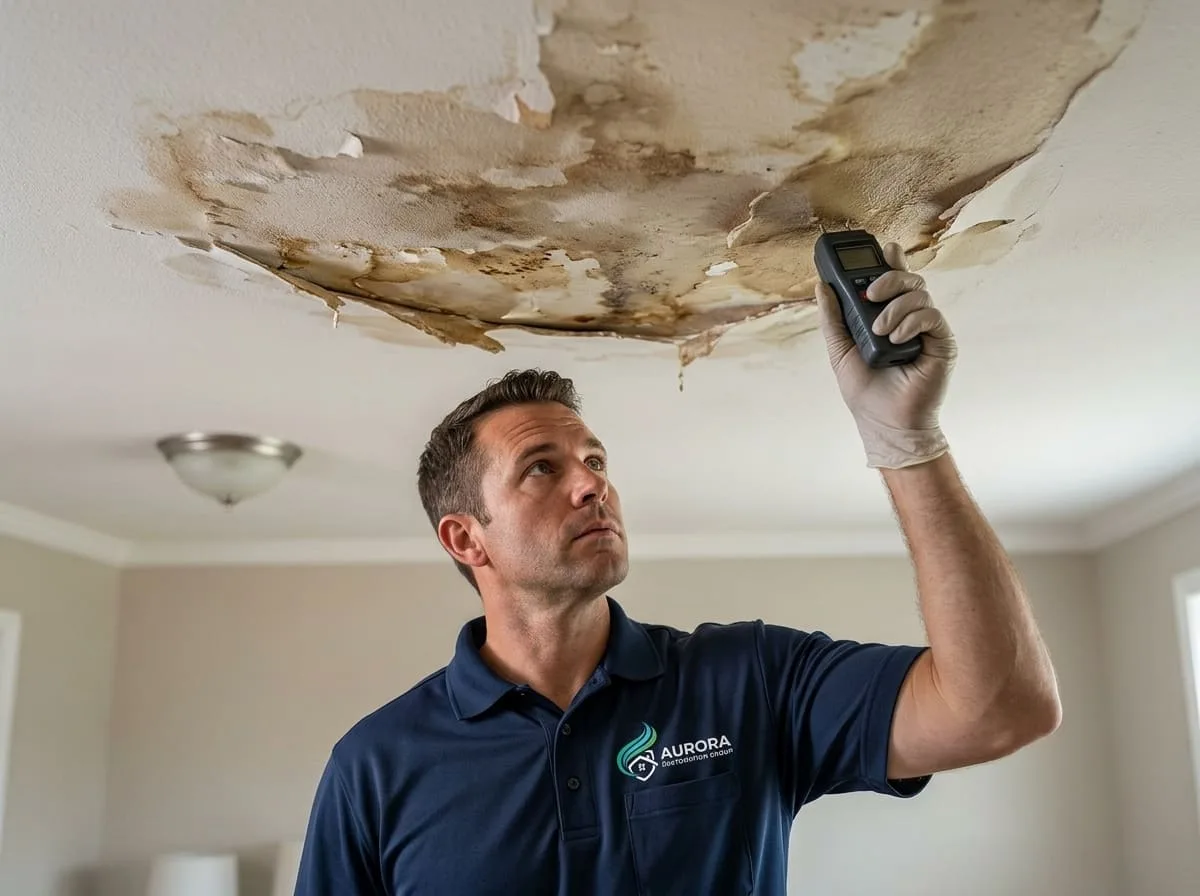
Why Ceiling and Wall Damage Rarely Stays Where It Started
Water follows gravity and the path of least resistance, which means it often travels along framing, insulation, or the back of drywall well before it becomes visible as a stain or bulge. By the time damage is visible, moisture has usually already spread beyond that single spot.
That's why an inspection typically covers a wider area than just the visible mark, using moisture meters to map how far the water actually traveled rather than assuming the damage stops at the stain's edge.
Common Causes in Aurora Homes
Roof and Attic Intrusion After Hail or Wind
Given Aurora's position in Hail Alley, roof damage from hail or high wind is a frequent cause of ceiling water stains, sometimes appearing well after the storm that caused the original damage. See storm and rain water damage for that connection.
Upstairs Plumbing Leaks
A slow leak from an upstairs bathroom, laundry room, or kitchen can show up as a ceiling stain on the floor below, sometimes long after the leak actually started, since gravity carries the water down through the ceiling cavity.
Burst or Leaking Pipes Inside Walls
Pipes routed through interior or exterior walls that crack, especially during a freeze-thaw event, often cause wall damage before any water reaches a visible surface. See burst pipe water damage for more on that cause.
Signs of Hidden Moisture
A musty smell, peeling paint, discoloration, or drywall that feels soft or spongy to the touch can all indicate moisture behind the visible surface, even without an obvious stain. Bulging or sagging drywall is a more advanced sign and can indicate a significant amount of trapped water.
How the Repair Process Works
Locating the Full Extent of the Damage
Thermal imaging and moisture meters help identify how far water traveled behind the wall or ceiling surface, which determines how much material needs attention. See how professionals find hidden moisture behind walls for more detail.
Drying What Can Be Saved
Not all wet drywall needs to be cut out. Drywall exposed to clean water for a short period can sometimes be dried in place, while drywall exposed to contaminated water or wet for an extended time usually needs removal. See can wet drywall be saved for how that decision is made.
Repairing and Repainting
Once the structure is confirmed dry, any removed drywall, insulation, or trim is replaced and the area is repainted to match, completing the job at the same standard as the rest of the room.
When It's More Than Just Drywall
If the ceiling or wall damage sits above hardwood flooring or affects a basement below, related pages worth reviewing include hardwood and flooring water damage and structural drying and dehumidification.
Insulation Damage Behind Walls and Ceilings
Insulation inside a wall cavity or attic can absorb and hold water long after the visible drywall dries, and wet fiberglass insulation in particular tends to lose its loft and effectiveness even after drying. In many cases, replacing affected insulation is more practical than attempting to dry and reuse it.
When Structural Concerns Go Beyond Drywall
Most ceiling and wall water damage is limited to drywall, insulation, and paint, but prolonged or significant water exposure can occasionally affect framing members themselves. If sagging, visible warping in framing, or structural movement is suspected, that assessment goes beyond standard restoration scope and may call for a structural engineer's evaluation before repairs proceed.
What Affects the Scope of a Ceiling or Wall Repair
The size of the affected area, whether insulation needs replacement, how much drywall was compromised, and any texture or paint matching required all factor into how extensive a repair ends up being. A small, contained stain from a quickly resolved leak is a very different job than a ceiling section that absorbed water for days before discovery.
Ceiling and Wall Damage in Multi-Story Homes
In a two-story home, water damage frequently shows up on a ceiling below the actual leak source, sometimes on a different floor entirely. Tracing the path between the two points is a standard part of the assessment, since repairing only the visible ceiling without finding the upstream source risks a repeat problem.
Ceiling and Wall Damage After Storms vs. Plumbing Failures
Storm-related ceiling damage and plumbing-related ceiling damage can look similar once drywall is stained, but the source location and water category often differ. Storm intrusion typically traces back to the roof, while a plumbing-related stain traces back to a fixture or pipe somewhere above. See storm and rain water damage for the roof-related side of this distinction.
Matching Texture, Paint, and Trim
Once new drywall is installed, matching existing texture and paint sheen is part of finishing the repair to a standard that blends with the rest of the room, rather than leaving an obviously patched section behind.
Ceiling Damage in Multi-Tenant and Commercial Buildings
In an office or multi-tenant building, ceiling damage often involves suspended ceiling tile systems rather than drywall, which respond differently to water exposure, tiles typically need replacement rather than drying, since they rarely hold their shape once saturated.
Ceiling and Wall Repair Timing
Repairs generally begin only after moisture readings confirm the surrounding structure is fully dry, since installing new drywall over damp framing or insulation risks trapping moisture behind the new surface and causing a repeat problem.
Frequently Asked Questions
Why is the ceiling stain bigger than where I think the leak is?+
Water travels along framing and the back of drywall before it becomes visible, so the stain's location doesn't always match the actual leak point directly above it. An inspection typically traces the water's path rather than assuming the source is right above the stain.
Can water-stained drywall just be painted over?+
Painting over a water stain without addressing the underlying moisture and drying the material first can trap moisture and lead to mold or a repeat stain. The area needs to be confirmed dry before any cosmetic repair.
How do you find water damage that isn't visible yet?+
Moisture meters and thermal imaging can detect elevated moisture levels inside walls and ceilings before staining or damage becomes visible on the surface, which helps catch problems earlier.
Will all the affected drywall need to be replaced?+
Not necessarily. Drywall exposed to clean water for a short time can sometimes be dried in place, while drywall exposed to contaminated water or prolonged moisture generally needs to be removed and replaced.
Is ceiling water damage a sign of a bigger roof problem?+
It can be, particularly after a hailstorm or high-wind event. A roofing inspection alongside the interior restoration helps confirm whether the source has actually been resolved or is likely to cause repeat damage.